The nf fire blanket in 1869: your 1st protection against domestic fires
The statistics are unequivocal: 300,000 domestic fires every year in France.
With this in mind, it is essential to equip ourselves with effective means of protection.
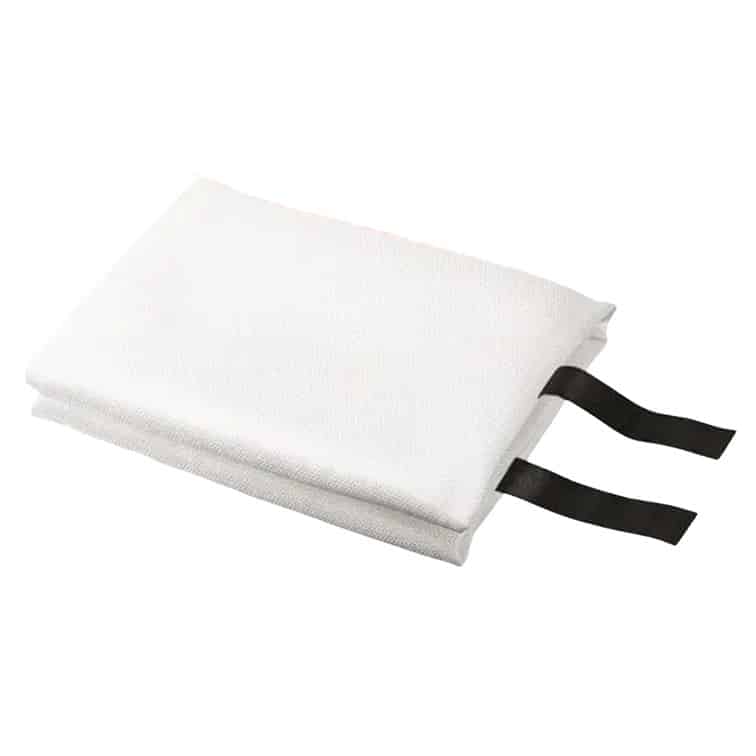
Our 120×120 cm or 120x180cm NF EN 1869 fire blanket, designed to the most stringent standards, is your first line of defence against flames. Its fiberglass composition makes it exceptionally resistant to heat.
Protect your loved ones and property from the risk of fire with our NF EN 1869-certified fiberglass fire blankets. Easy to use and incredibly effective, they’re ideal for quickly smothering incipient fires. Find out why our blankets are the ideal solution for your safety.
The nf fire blanket in 1869: your 1st protection against domestic fires
The statistics are unequivocal: 300,000 domestic fires every year in France.
With this in mind, it is essential to equip ourselves with effective means of protection.
Our 120×120 cm or 120x180cm NF EN 1869 fire blanket, designed to the most stringent standards, is your first line of defence against flames. Its fiberglass composition makes it exceptionally resistant to heat.
Protect your loved ones and property from the risk of fire with our NF EN 1869-certified fiberglass fire blankets. Easy to use and incredibly effective, they’re ideal for quickly smothering incipient fires. Find out why our blankets are the ideal solution for your safety.
Why choose a NF EN 1869 fiberglass fire blanket?
NF EN 869 fiberglass fire blankets are indispensable safety equipment in many homes and business environments.
Here are the main reasons why you should opt for a NF EN 1869 fibreglass fire blanket:
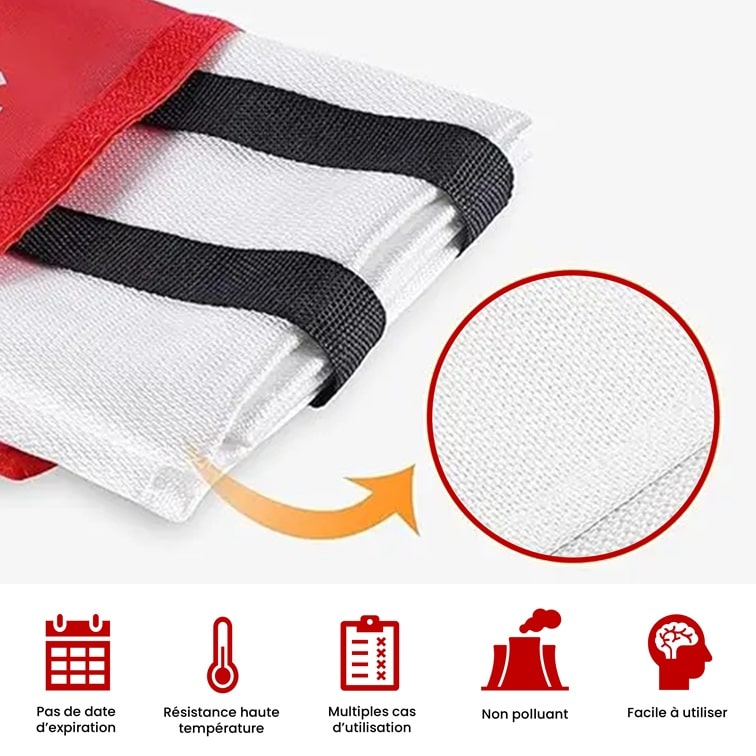
- Extreme heat resistance: Fiberglass can withstand very high temperatures without melting or warping, enabling it to effectively smother flames.
- Non-combustible: Fiberglass does not burn, guaranteeing optimum safety in the event of fire.
- Lightweight: Despite its strength, fiberglass roofing is lightweight and easy to handle, even by inexperienced operators.
- Durability: Its long service life makes it a profitable long-term investment.
- Ease of use: The fiberglass fire blanket is easy to deploy, even under stress.
- Versatility: It can be used to extinguish different types of fire (solids, flammable liquids, electrical equipment).
In short, the fiberglass fire blanket is an effective and versatile tool for dealing with the first moments of a fire. It offers optimum protection for you and your property.
The advantages of fiberglass
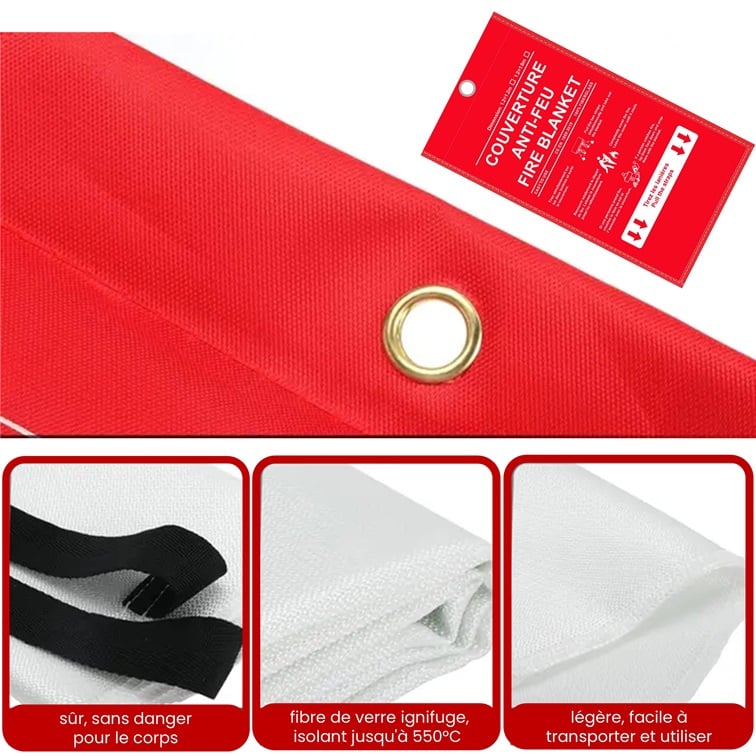
Fiberglass is the material of choice for fire blankets. Its unique properties make it an invaluable ally when it comes to fire safety:
- Exceptional thermal resistance: Fiberglass can withstand temperatures of up to 1000°C without melting or warping. This extreme resistance enables it to effectively smother flames and protect material assets.
- Thermal insulation: As well as resisting heat, fiberglass provides thermal insulation. This limits the spread of heat and protects surrounding areas from fire.
- Lightweight and easy to handle: Despite its strength, fiberglass is a lightweight material. This makes the blanket much easier to handle, even for children or the elderly, and makes it easy to store.
- Durability and longevity: Thanks to its resistance to external aggression and dimensional stability, fiberglass roofing offers exceptional longevity. It can be used over and over again without losing its effectiveness.
- Chemical inertness: Fiberglass is a chemically inert material. It does not react with combustion products, and releases no toxic substances in the event of fire, thus protecting the health of occupants.
- Respect for the environment: Fiberglass is a recyclable and durable material, and part of an environmentally-friendly approach.
By choosing a NF EN 1869 fiberglass fire blanket, you’re opting for a safe, high-performance, durable product that will protect you effectively in the event of a fire.
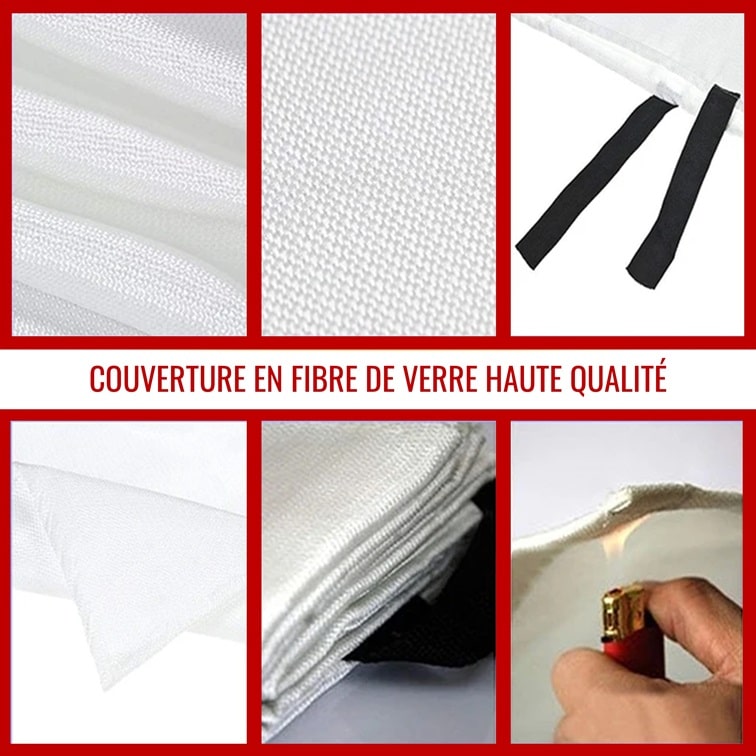
Our NF EN 1869 fire blankets can be adapted to suit every need
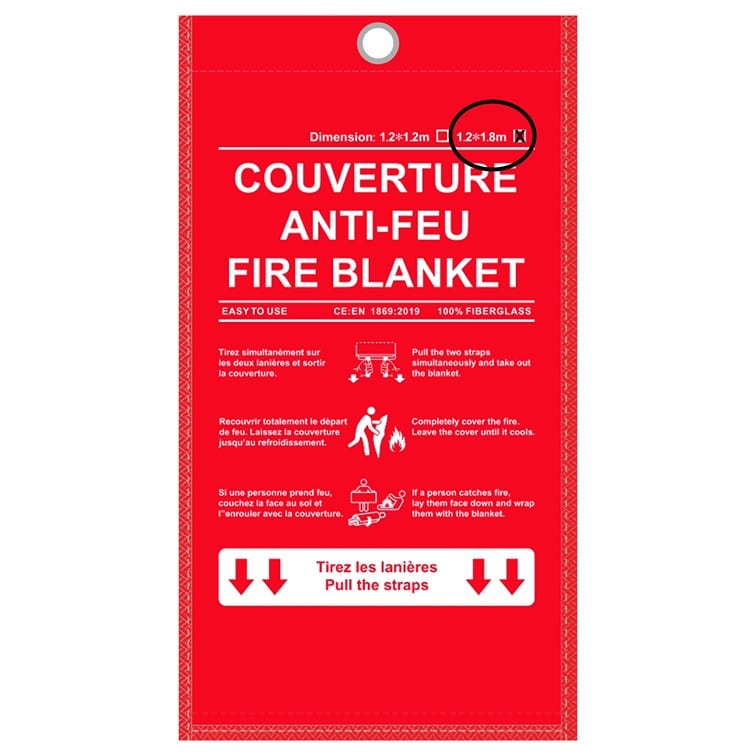
Discover our fiberglass fire blankets, available in two formats:
-
Why these dimensions?
- 120x120cm: This is a versatile size that covers enough surface area for many types of fire. Easy to handle and store.
- 120x180cm: This size offers a larger coverage area, which can be useful for larger fires or more spacious areas.
NF EN 1869: your guarantee of quality
All our fire blankets are NF EN 1869 certified, attesting to their compliance with the strictest European fire safety standards.
How to use your NF EN 1869 fire blanket?
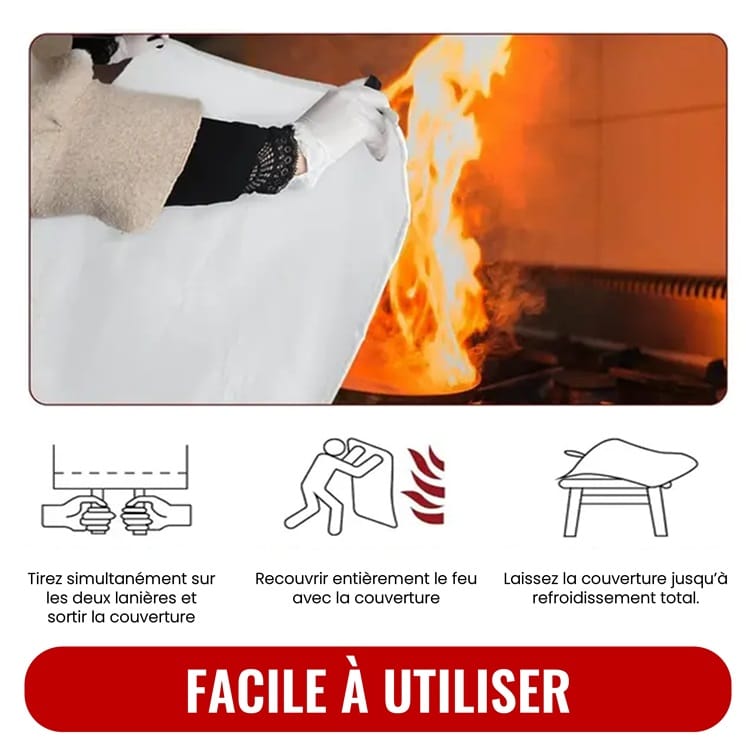
To use your fiberglass fire blanket, nothing could be simpler. Take action by following the following steps:
Key milestones:
- Keep your blanket in an accessible place.
- Switch off the power supply if possible.
- Evacuate people and animals.
- Pull both straps together and pull out the fire blanket.
- Throw the blanket over the base of the flames and completely cover the burning fireplace. If possible, protect your hands with gloves or a wet cloth.
- Do not lean over the fire.
- Leave the cover on until completely cool
Why choose a NF EN 1869 fiberglass fire blanket?
NF EN 869 fiberglass fire blankets are indispensable safety equipment in many homes and business environments.
Here are the main reasons why you should opt for a NF EN 1869 fibreglass fire blanket:
- Extreme heat resistance: Fiberglass can withstand very high temperatures without melting or warping, enabling it to effectively smother flames.
- Non-combustible: Fiberglass does not burn, guaranteeing optimum safety in the event of fire.
- Lightweight: Despite its strength, fiberglass roofing is lightweight and easy to handle, even by inexperienced operators.
- Durability: Its long service life makes it a profitable long-term investment.
- Ease of use: The fiberglass fire blanket is easy to deploy, even under stress.
- Versatility: It can be used to extinguish different types of fire (solids, flammable liquids, electrical equipment).
In short, the fiberglass fire blanket is an effective and versatile tool for dealing with the first moments of a fire. It offers optimum protection for you and your property.
The advantages of fiberglass
Fiberglass is the material of choice for fire blankets. Its unique properties make it an invaluable ally when it comes to fire safety:
- Exceptional thermal resistance: Fiberglass can withstand temperatures of up to 1000°C without melting or warping. This extreme resistance enables it to effectively smother flames and protect material assets.
- Thermal insulation: As well as resisting heat, fiberglass provides thermal insulation. This limits the spread of heat and protects surrounding areas from fire.
- Lightweight and easy to handle: Despite its strength, fiberglass is a lightweight material. This makes the blanket much easier to handle, even for children or the elderly, and makes it easy to store.
- Durability and longevity: Thanks to its resistance to external aggression and dimensional stability, fiberglass roofing offers exceptional longevity. It can be used over and over again without losing its effectiveness.
- Chemical inertness: Fiberglass is a chemically inert material. It does not react with combustion products, and releases no toxic substances in the event of fire, thus protecting the health of occupants.
- Respect for the environment: Fiberglass is a recyclable and durable material, and part of an environmentally-friendly approach.
By choosing a NF EN 1869 fiberglass fire blanket, you’re opting for a safe, high-performance, durable product that will protect you effectively in the event of a fire.
Our NF EN 1869 fire blankets can be adapted to suit every need
Discover our fiberglass fire blankets, available in two formats:
-
Why these dimensions?
- 120x120cm: This is a versatile size that covers enough surface area for many types of fire. Easy to handle and store.
- 120x180cm: This size offers a larger coverage area, which can be useful for larger fires or more spacious areas.
NF EN 1869: your guarantee of quality
All our fire blankets are NF EN 1869 certified, attesting to their compliance with the strictest European fire safety standards.
How to use your NF EN 1869 fire blanket?
To use your fiberglass fire blanket, nothing could be simpler. Take action by following the following steps:
Key milestones:
- Keep your blanket in an accessible place.
- Switch off the power supply if possible.
- Evacuate people and animals.
- Pull both straps together and pull out the fire blanket.
- Throw the blanket over the base of the flames and completely cover the burning fireplace. If possible, protect your hands with gloves or a wet cloth.
- Do not lean over the fire.
- Leave the cover on until completely cool
Best practices for optimum safety
Evacuation drills: Practice regularly.
Smoke detectors: Install them in your home.
Maintenance: Check your safety equipment regularly.
Why choose our NF EN 1869-certified fire blankets?
- NF EN 1869 certification
- Quality manufacturing
- Adapted dimensions
- Competitive prices
- Developed in France
Don’t wait any longer to protect your loved ones and your property. Order your fiberglass fire blanket now and make the safe choice!
When and where to use a 120x120cm or 120x180cm fire blanket?
NF EN 1869-certified fire blankets, 120x120cm and 120x180cm in size, are essential safety tools for quickly controlling an outbreak of fire. Their size makes them particularly suitable for use in the home or in small business premises.
Here are a few situations and places where they can be useful:
At home
- Kitchen: To quickly extinguish a pan, fryer or oven fire.
- Garage: To control an engine fire or a fire involving flammable products.
- Workshop: To extinguish a fire involving tools or flammable materials.
- Chimney: To extinguish an overflowing chimney fire.
On business premises
- Restaurants and institutional kitchens: To control a cooking fire.
- Workshops and warehouses: To extinguish a fire involving combustible materials.
- Offices: To control a dustbin or electrical appliance fire.
- Vehicles: To extinguish a fire in an engine compartment (although fire extinguishers are generally more suitable).
Other locations
- Motorhomes and caravans: To extinguish a kitchen or electrical appliance fire.
- Farm buildings: To control a fire involving straw or farm equipment.

Why choose our NF EN 1869-certified fire blankets?
- NF EN 1869 certification
- Quality manufacturing
- Adapted dimensions
- Competitive prices
- Developed in France
Don’t wait any longer to protect your loved ones and your property. Order your fiberglass fire blanket now and make the safe choice!
When and where to use a 120x120cm or 120x180cm fire blanket?
NF EN 1869-certified fire blankets, 120x120cm and 120x180cm in size, are essential safety tools for quickly controlling an outbreak of fire. Their size makes them particularly suitable for use in the home or in small business premises.
Here are a few situations and places where they can be useful:
At home
- Kitchen: To quickly extinguish a pan, fryer or oven fire.
- Garage: To control an engine fire or a fire involving flammable products.
- Workshop: To extinguish a fire involving tools or flammable materials.
- Chimney: To extinguish an overflowing chimney fire.
On business premises
- Restaurants and institutional kitchens: To control a cooking fire.
- Workshops and warehouses: To extinguish a fire involving combustible materials.
- Offices: To control a dustbin or electrical appliance fire.
- Vehicles: To extinguish a fire in an engine compartment (although fire extinguishers are generally more suitable).
Other locations
- Motorhomes and caravans: To extinguish a kitchen or electrical appliance fire.
- Farm buildings: To control a fire involving straw or farm equipment.
Regular questions of our customers
The answer is probably here 🙂
The lifespan of a fire blanket depends on a number of factors:
- Manufacturing quality: A cover made from high-quality materials and to strict standards will last longer.
- Storage conditions: A blanket stored in a dry, dark place will retain its properties longer.
- Use: A regularly used or damaged cover should be replaced sooner.
As a general rule, a well-maintained fire blanket can last for several years. However, it is important to check its condition regularly:
- Visual appearance: Look for holes, tears, burn marks or dirt.
- Material integrity: Make sure the fiberglass is undamaged.
We recommend that you consult the manufacturer’s instructions for the exact service life of your cover and how to check it.
Tips for extending the life of your fire blanket:
- Store in a dry place away from direct sunlight.
- Do not fold the blanket in such a way as to damage the fibres.
- Clean regularly with a soft cloth and soapy water if necessary.
- Replace at the first sign of wear.
Important note: A damaged fire blanket no longer guarantees optimum protection. Don’t hesitate to replace it if you have any doubts.
In short, the lifespan of a fire blanket can vary, but by taking good care of it, you can extend its useful life and guarantee your safety.
Storing a fire blanket is crucial to preserving its effectiveness and lifespan. Here are a few tips for optimal storage:
- Dry, heat-free place: Avoid damp areas or areas exposed to heat sources, such as kitchens or radiators. Moisture can deteriorate fiberglass, while excessive heat can alter its properties.
- Keep out of direct sunlight: UV rays can damage roofing materials. Store in a dark place or away from direct sunlight.
- In original packaging if possible: The original packaging is often designed to protect the cover from the elements. If you no longer have it, use a clean, dry cloth bag.
- Out of reach of children and pets: It’s important to keep the blanket out of the reach of children and pets to avoid any risk of accidental handling.
- Easily accessible in case of emergency: The blanket must be placed in an easily accessible place so that it can be used quickly in the event of fire.
Some ideas for locations:
- In a cupboard or wardrobe: Choose a high spot to prevent children from gaining access.
- In a wall-mounted box: A wall-mounted box is a discreet and practical solution for storing the blanket in the kitchen or near a high-risk appliance.
- In a wall-hung bag: Practical and space-saving, this type of storage keeps the blanket close at hand.
In short, to prolong the life of your fire blanket, it’s essential to store it in a dry place, away from light and heat, and to keep it clean.
We strongly advise against washing a fire blanket.
The flame-retardant treatments that make the blanket effective can be altered by washing, considerably reducing its protective properties. What’s more, water and detergents can damage the blanket’s fibers and reduce its resistance to heat.
If your fire blanket is dirty, here are a few tips:
- Surface cleaning: Use a damp cloth and mild soap to gently remove stains.
- Avoid hot water: Hot water can damage flame-retardant treatments.
- Do not twist or wring: these actions can damage the fibres of the blanket.
- Air dry in the shade: Avoid drying the blanket in the sun or near a heat source.
If in doubt, consult the manufacturer’s instructions.
Why not wash a fire blanket?
- Loss of effectiveness: Washing can alter flame-retardant treatments.
- Fiber damage: Water and detergents can damage blanket fibers.
- Reduced service life: Frequent washing can considerably reduce the service life of the cover.
In conclusion, it’s better to replace a dirty or damaged fire blanket than to attempt to wash it.
A fire blanket and a fire extinguisher are both fire safety equipment, but they have different roles and uses:
Fire blanket
- Operating principle: It smothers the fire by cutting off access to oxygen.
- Use:
- Small fires: Perfect for extinguishing small incipient fires on solid surfaces (furniture, fabrics, etc.).
- Inflamed persons: Highly effective for extinguishing flames on a person’s clothing.
- Protection: Can be used to protect an area from a fire in progress.
- Advantages:
- Easy to use, even by the untrained eye.
- Leaves no residue.
- Can be used on people.
- Limits:
- Less effective on liquid or gas fires.
- Cannot be used on large surfaces.
Fire extinguisher
- Working principle: It extinguishes the fire by interrupting the chemical combustion reaction, cooling the fuel or covering it with an inert substance.
- Use:
- Different types of fire: There are different types of extinguisher for different types of fire (solids, liquids, gases, metals).
- Larger fires: Can be used for larger fires than a fire blanket can handle.
- Advantages:
- Versatile, can be used on different types of fires.
- Effective on larger fires.
- Limits:
- Requires training for optimum use.
- Some extinguishers can leave residues.
- Some extinguishers can be dangerous if misused (for example, a dry powder extinguisher can be irritating to the respiratory tract).
In a nutshell:
- Fire blanket: Ideal for small fires and flaming people, easy to use.
- Fire extinguisher: More versatile, suitable for different types of fire, but requires training.
The ideal fire safety kit includes both a fire blanket and a fire extinguisher adapted to your environment.
When to use what?
- Fire blanket: Small fires on solid surfaces, flaming people.
- Extinguisher: Liquid, gas, solid and larger fires.
Important: It’s essential to know the safety instructions and how to use this equipment before you need it.
Legal fire safety requirements vary according to the nature of your business, the size of your premises and the regulations in force in your country or region.
However, here are a few general principles that apply to most situations:
General obligations
- Risk assessment: Every company must carry out a fire risk assessment to identify potential hazards and implement appropriate preventive measures.
- Emergency equipment: Suitable emergency equipment must be in place, including fire extinguishers, fire blankets, fire alarms and clearly marked emergency exits.
- Staff training: Staff must be trained in first aid, the use of fire safety equipment and evacuation procedures.
- Regular maintenance: Fire safety equipment must be regularly checked and maintained.
- Prevention plan: A risk prevention plan must be drawn up and regularly updated. In particular, it must define procedures for alerting, evacuating and responding to fires.
Specific obligations
- Establishments open to the public (ERP): ERP are subject to particularly strict fire safety regulations. Obligations vary according to the category of ERP (cinema, restaurant, hotel, etc.).
- Companies: Companies must comply with the provisions of the French Labour Code on fire safety, particularly as regards risk prevention, worker protection and emergency resources.
- Residential buildings: Regulations differ from country to country, but in general, rules exist concerning the installation of smoke detectors, the maintenance of electrical installations and the clearing of emergency exits.
Consequences of a breach
Failure to comply with legal fire safety requirements may result in :
- Administrative sanctions: fines, administrative closure.
- Criminal penalties: In the event of death or serious injury, the person responsible may be liable to criminal prosecution.
- Civil liability: The company may be held liable for damage caused by fire.
To find out exactly what your obligations are, we recommend you contact the relevant bodies in your country or region (labor inspectorate, fire department, etc.).
Some useful resources:
- In France:
- The Labor Code
- The Construction and Housing Code
- Ministerial decrees on fire safety
.
In Europe, the reference standard for fire blankets is NF EN 1869. This standard specifies the performance requirements to be met by fire blankets designed to smother small fires or the clothing of a person who has caught fire.
Why is this standard important?
- Quality guarantee: This ensures that the blanket is capable of effectively extinguishing a small fire and protecting a burning person.
- Safety: It ensures that the cover does not present any additional danger when in use.
- European harmonization: This harmonizes requirements across Europe, facilitating trade in these products.
What does this standard check?
- Materials: The composition of the roof must be adapted to its function.
- Dimensions: The blanket must be large enough to cover a fire or a person.
- Flame resistance: The cover must be flame-resistant and not burn off quickly.
- Extinguishing efficiency: The blanket must be able to smother a fire quickly.
- Smoke toxicity: The smoke released by the roofing in the event of fire must not be toxic.
How can I be sure that a cover meets the standard?
- CE mark: The cover must bear the CE mark, attesting to its compliance with the European standard.
- Certificate of conformity: The manufacturer must be able to provide a certificate of conformity attesting that the cover has been tested and meets the requirements of the standard.
In a nutshell,
If you want to buy a fire blanket, make sure it carries the CE mark and that the manufacturer can provide a certificate of compliance with standard NF EN 1869. This will guarantee a safe and effective product.
Important note: Even if a cover meets the standard, it is important to store it correctly and use it in accordance with the manufacturer’s instructions to ensure optimum effectiveness.
Yes, anyone can use a fire blanket. It’s a safety tool designed to be accessible to anyone, even without specific training. However, there are a few precautions and tips you need to know to use it safely and effectively:
Advice on use for private individuals:
- Stay calm: In the event of a fire, it’s important to keep your cool so you can act quickly and effectively.
- Assess the situation: Before using the blanket, assess the size of the fire. If the flames are too large, evacuate the area and call the fire department.
- Protecting your face: Hold the blanket by the handles and place it in front of your face to protect you from heat and fumes.
- Covering the fire: Approach the fire slowly and wrap the blanket completely around it. Press firmly to smother the flames.
- Don’t remove the blanket too quickly: leave it in place until you’re sure the fire is completely out.
- Do not use the blanket on liquid or gas fires: Fire blankets are primarily designed for surface fires (furniture, fabrics).
- Do not reuse a damaged blanket: If the blanket has been used to extinguish a fire, it’s best to replace it, as its fire-retardant properties may be impaired.
Additional precautions :
- Read the manufacturer’s instructions carefully: each cover may have its own specific uses.
- Store the blanket in an accessible, dry place: it must be ready for use in an emergency.
- Train the members of your household: Organize a small fire simulation so that everyone knows how to react and use the blanket.
In short, the fire blanket is a simple and effective tool for controlling a small fire. By following these tips, you’ll be able to use it safely and limit the damage in the event of a fire.
Clear, concise instructions:
- Assess the situation: Make sure the fire is small enough to be controlled with a blanket. If the fire is too large, evacuate immediately and call the fire department.
- Protect yourself: Hold the blanket by the handles and place it in front of your face to protect you from heat and smoke.
- Approach the fire: Approach the fire slowly and carefully.
- Cover the fire: Wrap the blanket completely around the fire, pressing firmly to smother the flames.
- Keep the blanket in place: Leave the blanket in place until you’re sure the fire is completely out.
- Don’t remove the blanket too quickly: this could allow the fire to re-ignite.
- Check the surrounding area: After extinguishing the fire, check for hidden embers that could reignite.
Additional tips:
- Stay calm: Panic can make you lose time and efficiency.
- Don’t lean over the fire: this increases the risk of smoke inhalation.
- If a person is on fire: Wrap them in the blanket from head to toe, taking care to protect your own face.
- After use: Inspect the cover for damage. If so, replace it.
Important: Fire blankets are designed to extinguish small fires. For larger fires, it’s essential to use a fire extinguisher or call the fire department.
By following these instructions, you can use a fire blanket safely and effectively.
No, fire blankets are not effective against all types of fire. Although they are a valuable tool for controlling small fires, they do have certain limitations.
Fire blankets are particularly effective for :
- Surface fires: These are ideal for extinguishing flames on solid materials such as wood, fabric or paper.
- Cooking fires: An overflowing saucepan or a pan that catches fire can often be controlled with a fire blanket.
- Clothing on fire: A fire blanket is the safest way to extinguish flames on a person.
The limits of a fire blanket :
- Flammable liquid fires: Blankets are not suitable for extinguishing gasoline, alcohol or oil fires. By pouring a blanket over a flaming liquid, you risk spreading the flames.
- Electrical fires: Never use a fire blanket on a live electrical appliance. Switch off the power supply before intervening.
- Gas fires: Blankets are not effective for extinguishing gas fires. Turn off the gas supply and ventilate the room.
- Large fires: For large fires, fire blankets are insufficient. It is imperative to evacuate the premises and call the fire department.
In short, fire blankets are a simple and effective tool for controlling small fires, but they should not replace fire extinguishers and are not suitable for all types of fire.
For optimum protection, we recommend using both a NF EN 1869 fire blanket and a fire extinguisher suited to your environment.
The ideal size for a fire blanket will depend mainly on the intended use and the space to be protected. No one size fits all, but here are a few things to consider when making the right choice:
Selection criteria based on requirements :
- Size of area to be protected:
- Small spaces: For a kitchen, office or moderate-sized room, a 1m x 1m blanket may be sufficient.
- Large spaces: To protect a larger area, or to cover several people, a 1m20 x 1m20 or 1m20 x 1m80 cover will be more suitable.
- Type of fire to anticipate:
- Small fires: To quickly extinguish a small fire, a standard-sized blanket (1m x 1m or 1m20 x 1m20) will suffice.
- Fires on people: To cover a person on fire, a larger blanket (1m20 x 1m80) will provide better protection.
- Number of people to protect:
- One person: a 1m x 1m blanket may be sufficient.
- Several people: A larger cover will protect several people at the same time.
- Standards:
- EN 1869: This European standard specifies the performance requirements for fire blankets. Make sure the blanket you choose complies with this standard.
Common sizes and their uses:
- 1m x 1m: Standard size, ideal for small spaces and small fires.
- 1m20 x 1m20: Larger size, suitable for larger spaces and covering several people.
- 1m20 x 1m80: Very large size, ideal for protecting large areas or several people.
Additional tips:
- Margin of safety: It’s always best to choose slightly more coverage than you need.
- Ease of use: The cover must be easy to deploy quickly in an emergency.
- Storage: Choose an easily accessible place to store your fire blanket.
In short, the ideal size for a fire blanket depends on your specific needs. By taking the above criteria into account, you can choose the cover best suited to your situation.
In France, fire blankets are not compulsory for all establishments. However, French regulations require their presence in certain specific cases, notably to prevent fire hazards and protect people.
When is a fire blanket mandatory?
- Establishments open to the public (ERP): ERP are subject to strict fire safety regulations. The presence of a fire blanket may be required depending on the nature of the establishment, its capacity and specific fire risks.
- Workshops and industrial premises: Companies handling flammable products or presenting explosion risks are often required to have fire-fighting equipment, which may include fire blankets.
- Professional kitchens: The kitchens of restaurants, institutions, etc., are high-risk areas for fire. The presence of a fire blanket is often recommended, or even compulsory, depending on the standards in force.
What standards must be met?
Fire blankets must meet specific standards to guarantee their effectiveness. In France, the NF EN 1869 standard is the benchmark. It defines performance criteria, dimensions, marking and test methods for fire blankets.
How can I find out about the obligations specific to my establishment?
To find out the exact obligations that apply to your establishment, we recommend that you :
- Consult the Code de la construction et de l’habitation: This legal text groups together all the rules applicable to buildings in France.
- Contact the fire and rescue services (SPIS): The SPIS can inform you about current regulations and advise you on the safety equipment best suited to your establishment.
- Call in an inspection body: A specialized inspection body can carry out a fire risk analysis and draw up a precise list of mandatory equipment.
In short, if you’re the owner or manager of an establishment, it’s important to find out what your legal obligations are in terms of fire safety. The presence of a fire blanket can be a simple and effective measure to prevent fire risks and protect people.
Important note: Fire safety regulations are subject to change. It is therefore advisable to keep abreast of the latest updates.
For further information, please visit the following websites:
- Ministry of the Interior: Access to current laws and regulations.
Choosing a fire blanket requires special attention, as it is an essential piece of safety equipment. There are several criteria to take into account when selecting the product best suited to your needs:
1. Standards
- NF EN 1869: This is the European reference standard for fire blankets. It guarantees that the product meets precise performance requirements in terms of fire resistance, dimensions and ease of use. Make sure the cover you choose carries this mark.
2. Materials
Fire blankets are generally made from non-combustible, heat-resistant materials, such as :
- Glass fibers: Highly resistant to high temperatures, they are commonly used for fire blankets.
- Aramid: This synthetic material offers excellent resistance to heat and abrasion.
- Kevlar: Known for its exceptional strength, Kevlar is often used for industrial applications.
3. Dimensions
The size of the cover will depend on its intended use:
- Small spaces: a 1m x 1m blanket may be sufficient for kitchens or offices.
- Large spaces: For workshops or warehouses, a 1.20m x 1.20m or 1.20m x 1.80m cover is more suitable.
- Use on people: A larger blanket will enable a person on fire to be fully covered.
4. Ease of use
- Handles: Sturdy handles make the cover easy to handle, even under stressful conditions.
- Packaging: Convenient packaging means the blanket can be stored close at hand and deployed quickly when needed.
5. Maintenance
- Washing: Check whether the blanket can be washed, and if so, according to which instructions.
- Storage: The cover should be stored in a dry, dust-free place.
Additional criteria to consider:
- Type of fire to be fought: Fire blankets are primarily designed for surface fires. For liquid or gas fires, a fire extinguisher is more appropriate.
- Operating environment: If the cover is to be used in an industrial environment, it is important to choose a model that is resistant to chemicals and mechanical stress.
- Budget: Fire blankets are available in a wide range of prices. Choose a product that offers good value for money.
To sum up, when choosing a suitable fire blanket, it’s essential to choose products that comply with NF EN 1869, are made from heat- and flame-resistant materials, and are sized to suit their intended use.
The price of a fire blanket can vary considerably depending on a number of factors:
- Size: Larger blankets are generally more expensive.
- Material: The materials used (fiberglass, aramid, etc.) influence cost.
- Brand: Recognized brands and high-quality products tend to be more expensive.
- Quantity: Bulk purchases are eligible for discounts.
- Additional features: Some blankets come with fastening or storage devices, which can increase their price.
Indicative price range:
It’s difficult to give an exact price, as prices can vary from seller to seller. However, you can generally find fire blankets at prices ranging from a few dozen euros for the simplest models to several hundred euros for top-of-the-range and large models.
Where can I buy a fire blanket?
You can find fire blankets in various outlets:
- DIY stores: Leroy Merlin, Castorama, etc.
- Specialized fire safety stores: These stores offer a wide range of products and can advise you on which cover is best suited to your needs.
- Online: Many websites sell fire blankets at competitive prices.
Tips for choosing a fire blanket:
- Don’t focus on price alone: opt for a quality product that meets current standards.
- Compare offers: Take the time to compare prices and features of different models before making your choice.
- Read customer reviews: Reviews from other buyers can help you get an idea of product quality.
In short, the price of a fire blanket is variable and depends on a number of factors. It’s important to define your needs and budget before making a purchase.
We suggest you read our article “lithium-ion battery: what kind of fire protection?


