Sizing and model selection for AeroXFireshield
Selecting a fire suppression system must never be based on stated volume alone. AeroXFireshield sizing also considers zone width and height, enclosure geometry, compartments, ventilation and the heat-sensitive cable route.
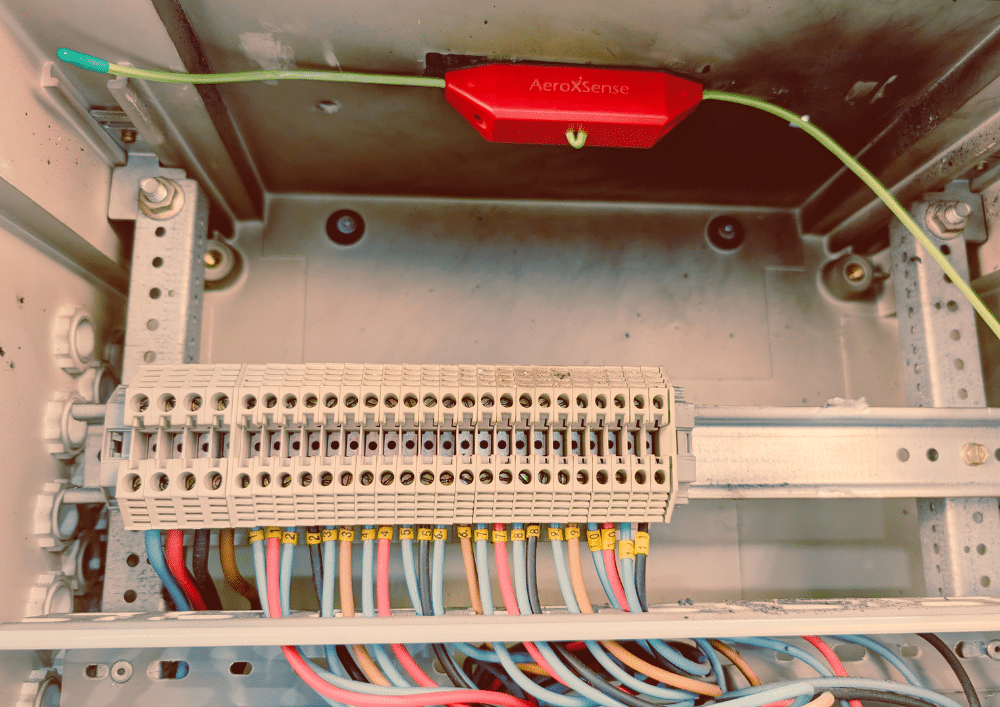
Example of customised protection for a professional enclosure using a 150-litre AX-150M and extended linear detection.
Six criteria to check before selecting a model
Correct selection combines the required agent quantity with the generator’s ability to cover the actual enclosure geometry.
Net internal volume
Calculate the genuinely usable volume inside the enclosure.
Zone width
Compare the width with the maximum permitted for one generator.
Zone height
Check that height does not exceed the model’s distribution capability.
Compartments and partitions
A separation may require several zones and generators.
Ventilation and leakage
Air inlets, extraction and cable openings may require a margin or dedicated study.
Hazard position
Detection must be above terminals, feeders and components likely to ignite.
Start by measuring the inside of the enclosure
Use usable internal dimensions rather than external cabinet dimensions.
For electrical panels, detection width is the priority criterion
Habitat models are selected by the width to cover and the module count. The calculation note uses an exact module width of 17.7 mm.
| Model | Detection width | Capacity guidance | Typical application |
|---|---|---|---|
| AX-05 | 5 cm | Up to 4 breakers | Very small panels or compact enclosures |
| AX-13 | 13 cm | Up to 8 breakers | Compact panels and secondary distribution |
| AX-23 | 23 cm | Up to 12 breakers | Common residential panels |
| AX-33 | 33 cm | Up to 18 breakers | Wide panels and extended configurations |

Habitat compatibility table by number of modules and protected width.
Maximum volume, width and height per generator
A model is suitable only when the assigned zone meets the volume, width and height limits simultaneously.
| Model | Protected volume | Maximum width | Maximum height | Agent mass | Discharge duration |
|---|---|---|---|---|---|
| AX-150M | 150 L | 600 mm | 900 mm | 6.1 g | 10–20 s |
| AX-300M | 300 L | 650 mm | 1,100 mm | 12.2 g | 12–22 s |
| AX-450M | 450 L | 700 mm | 1,500 mm | 18.3 g | 14–24 s |
| AX-600M | 600 L | 800 mm | 1,900 mm | 24.4 g | 16–26 s |
| AX-750M | 750 L | 900 mm | 1,900 mm | 30.5 g | 18–30 s |
| AX-1050M | 1,050 L | 1,100 mm | 1,900 mm | 42.7 g | 20–34 s |
| AX-1200M | 1,200 L | 1,200 mm | 1,900 mm | 48.8 g | 22–38 s |
A cabinet may require several generators even when total volume appears compatible
When width exceeds the model limit, divide the enclosure into theoretical zones. Each zone receives a generator able to cover its own volume.
Rule to apply
- Divide the width evenly into permitted zones
- Calculate the volume of each zone
- Select sufficient capacity for every zone
- Check total capacity covers the whole enclosure
- Connect units using the prescribed architecture
What not to do
- Select only the largest model from total volume
- Extend the cable to compensate for excessive width
- Assume aerosol will freely cross partitions
- Place all generators in one section
- Ignore the maximum distribution height
180 × 120 × 40 cm cabinet: why one AX-1050M is not enough
Total volume is 864 litres, but the 1,800 mm width exceeds the 1,100 mm limit for one AX-1050M.
The correct model must also be installed in the correct position
Performance depends on aligning the device or heat-sensitive cable with the area where flames and hot gases will rise.
Top-mounted, nozzles downward
The generator is installed at the top with discharge nozzles facing down.
Aligned with the hazard
The sensor or cable is placed vertically above terminals, feeders and connections.
Critical distance
The manual gives a target distance of 40–50 mm between the hazard and sensitive face for direct alignment.
No obstruction
The path of flame and hot gases must not be blocked by devices, partitions or cable bundles.
Remote HDC detection
Where generator alignment is impossible, linear detection is routed above the hazard.
Special horizontal installation
For horizontal placement, the manual requires a 50% nominal-power reduction and new sizing.
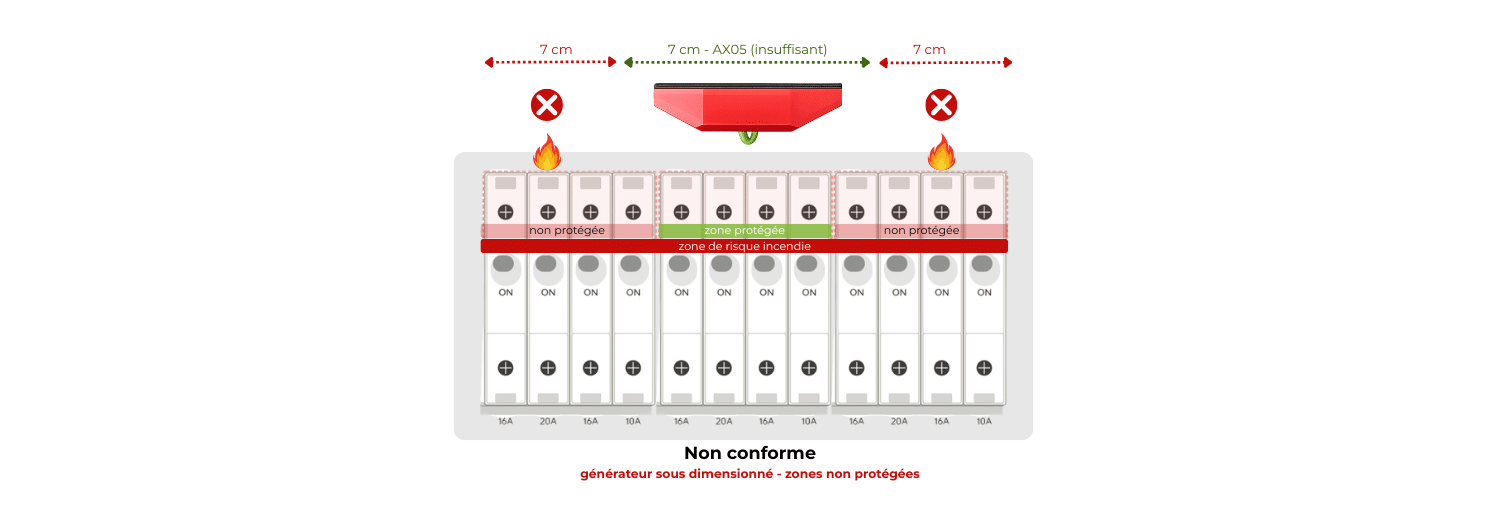
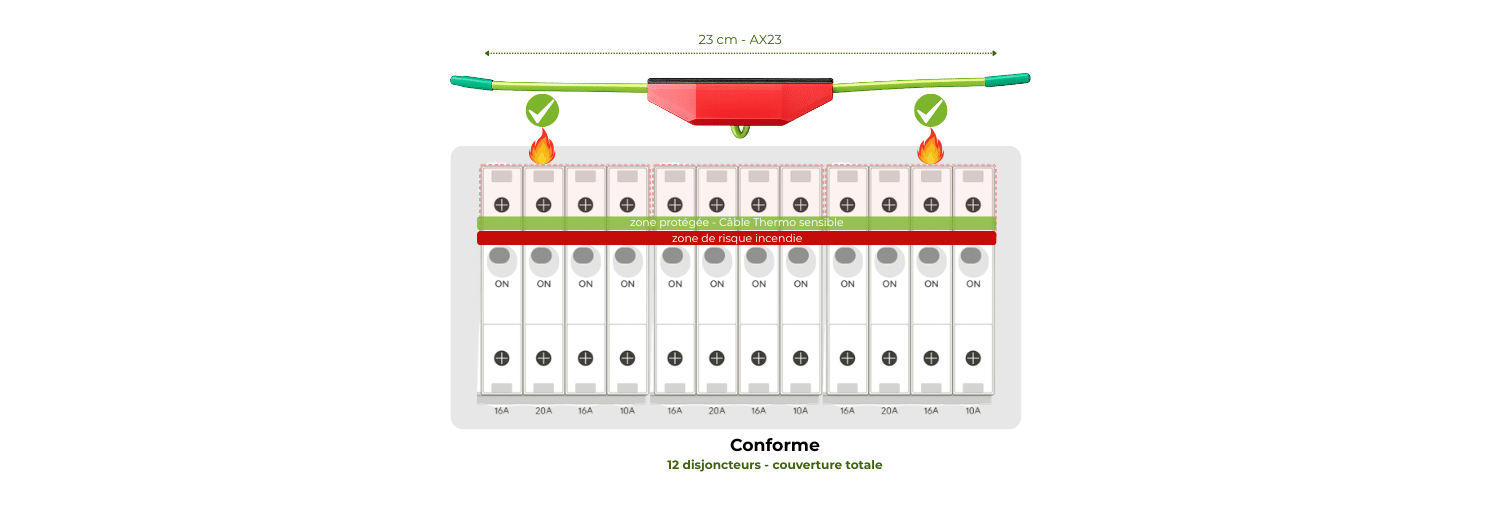
Comparison between an undersized installation leaving unprotected areas and a compliant installation covering the useful width.
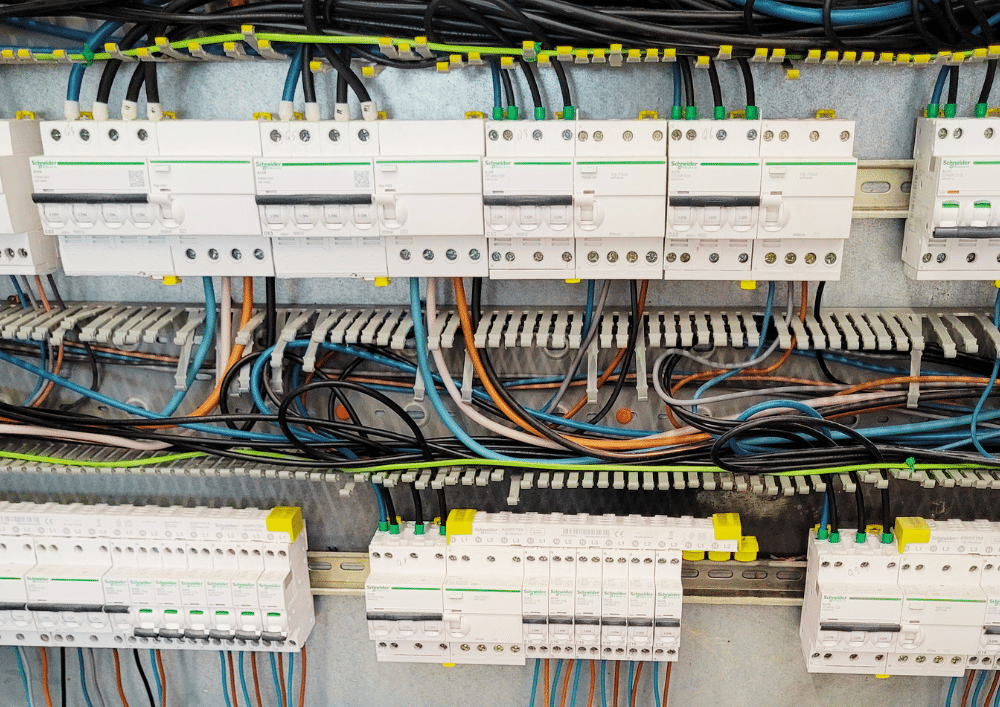
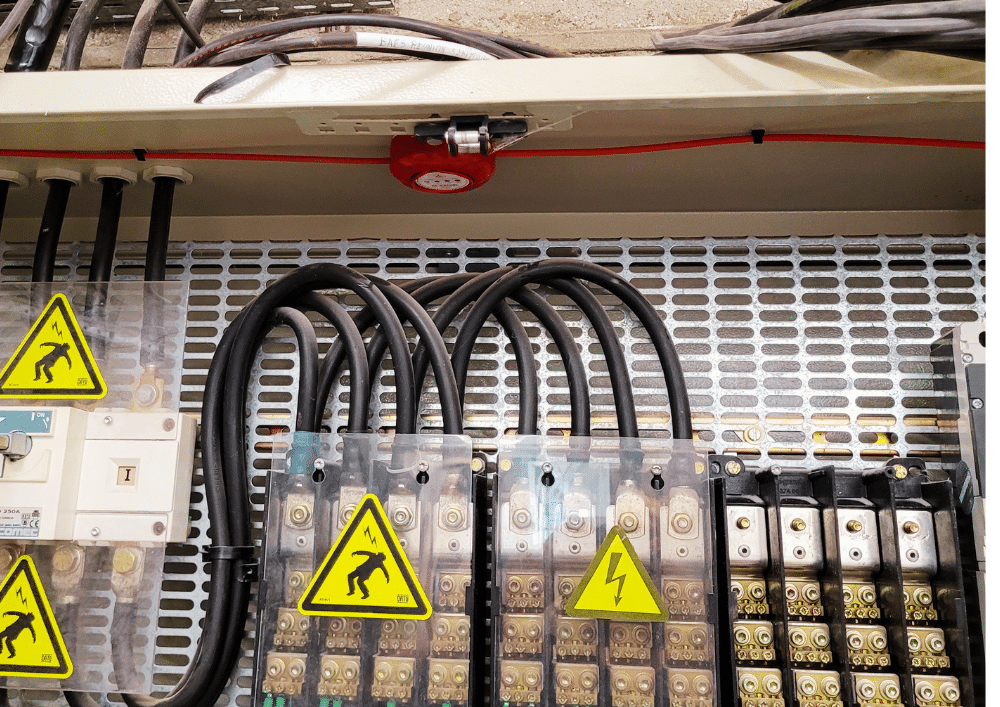
Example of linear thermal detection installed in a professional cabinet.
When are several generators required?
Multiple units address excessive width, large volume, compartments or geometry that prevents uniform distribution from one point.
Excessive width
The zone exceeds the permitted width for the selected model.
Volume above one unit
One generator’s nominal capacity is insufficient.
Separate compartments
Each compartment may become a distinct protection zone.
Detection over several areas
The route must cover distant rows or volumes.
Coordinated activation
Units are connected for simultaneous or cascaded activation according to the validated design.
Capacity per zone
Each generator must cover its assigned zone, not merely contribute to the total.
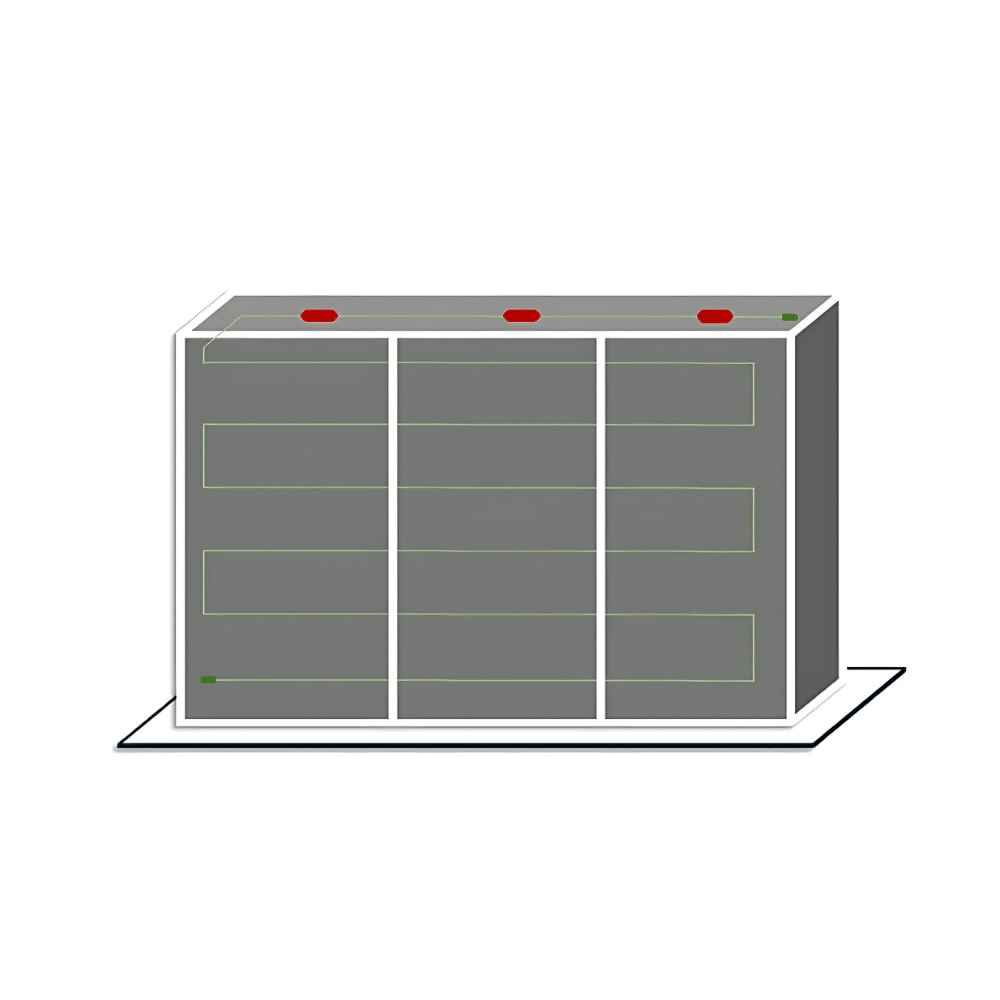
AeroXFireshield Pro layout with distributed linear detection inside a cabinet.
Errors that lead to incorrect model selection
Five items to send AeroXSense
Frequently asked questions about AeroXFireshield sizing
Does the AX-150M protect 150 litres?
Yes. The technical table states a nominal protected volume of 150 litres, subject to its 600 mm maximum width, 900 mm maximum height and installation conditions.
Is volume enough to select a model?
No. Maximum width, maximum height, compartments, ventilation and detection position must also be checked.
How do I calculate cabinet volume?
Multiply internal dimensions in centimetres and divide by 1,000 to obtain litres.
Should component volume be deducted?
This page provides pre-selection. For precise validation, use useful internal dimensions and submit dense configurations to support.
What if the cabinet is wider than the model limit?
Divide it into theoretical zones of permitted width and install one generator per zone, sized for that zone volume.
Can a longer heat-sensitive cable allow a smaller model?
No. It extends detection only and does not increase agent mass, distribution width or protected volume.
How is a compartmented cabinet sized?
Study each compartment separately where partitions restrict heat or aerosol movement.
How should a ventilated cabinet be treated?
Natural or forced ventilation may cause agent loss. A safety margin or dedicated study is required.
Which model is suitable for 432 litres?
Volume points to the 450-litre AX-450M, but width, height and zone configuration must also comply.
Why use two AX-450M units in the 864-litre example?
Because the cabinet is 1,800 mm wide. It is divided into two 900 mm zones, each 432 litres and fitted with one AX-450M.
What is the activation temperature?
The technical table states 170 °C ±10 °C for Pro and Industry models.
Can the generator be installed horizontally?
Only under the manual’s special provisions: detection cable above the hazard, 50% nominal-power reduction and revised sizing.
How is a Habitat model selected?
Detection width corresponding to module count is the priority: AX-05, AX-13, AX-23 or AX-33.
Can I cut or shorten the HDC cable?
No. Modification is prohibited. Extensions and joints must use the specified AeroXSense accessories.
Does online selection replace a calculation note?
No. It supports pre-selection. Complex, ventilated, compartmented or multiple-unit projects require technical validation.
Would you like to validate a model selection?
Send internal dimensions, cabinet photographs, compartments, ventilation and hazard locations. We will check volume, geometric limits and the detection route.
