Fire suppression system for pool electrical panels
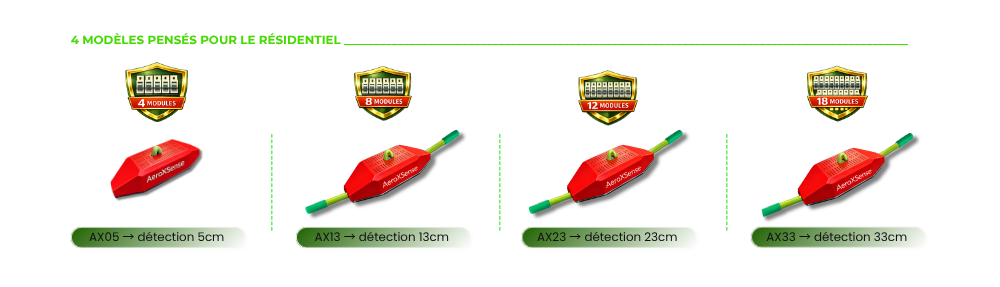
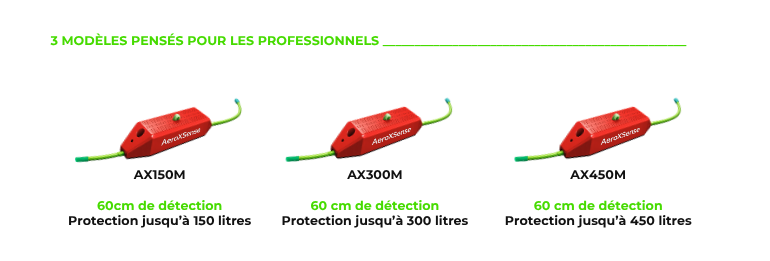
AeroXFireshield automatically detects and suppresses fire inside pool electrical panels, filtration cabinets and compatible plant rooms. AX33 is particularly suitable for residential panels, while AX150M addresses larger cabinets and installations.
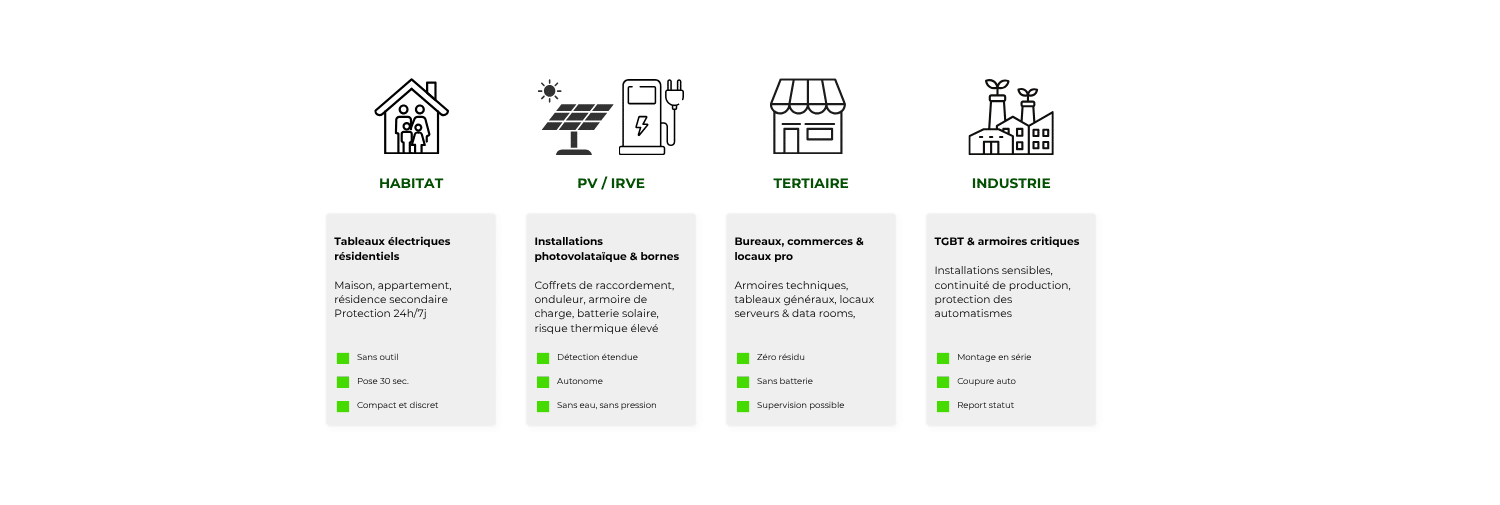
Fire protection for a pool electrical panel using a compact or professional model depending on volume.
Why can a pool electrical panel overheat or catch fire?
Pool panels combine power, automation, humidity and sometimes corrosive chemicals.
Pump contactors
Repeated cycles and current can degrade contacts.
Terminals and tightening
Loose connections create resistance and heat.
Lighting transformers
Transformers may overheat under fault or overload.
Timers and controls
Control components often operate continuously.
Heating and heat pumps
High-power feeders stress protection and connections.
Electrolysis and treatment
Electronic supplies face humidity and chlorine.
Condensation
Moisture promotes corrosion and insulation faults.
Poor ventilation
Heat accumulates in poorly ventilated spaces.
AX33 or AX150M: which direction?
The same technology can protect a compact residential panel or a larger technical cabinet.
AX33 — residential panels
- Compact format
- Linear detection across panel width
- Suitable for many filtration panels
- Top-mounted installation
- Selection by actual width and volume
AX150M — cabinets and plant rooms
- Capacity for larger volumes
- Remote detection possible
- Status reporting and external shutdown options
- Suitable for collective pools
- Several units possible
Detect heat and act directly inside the panel
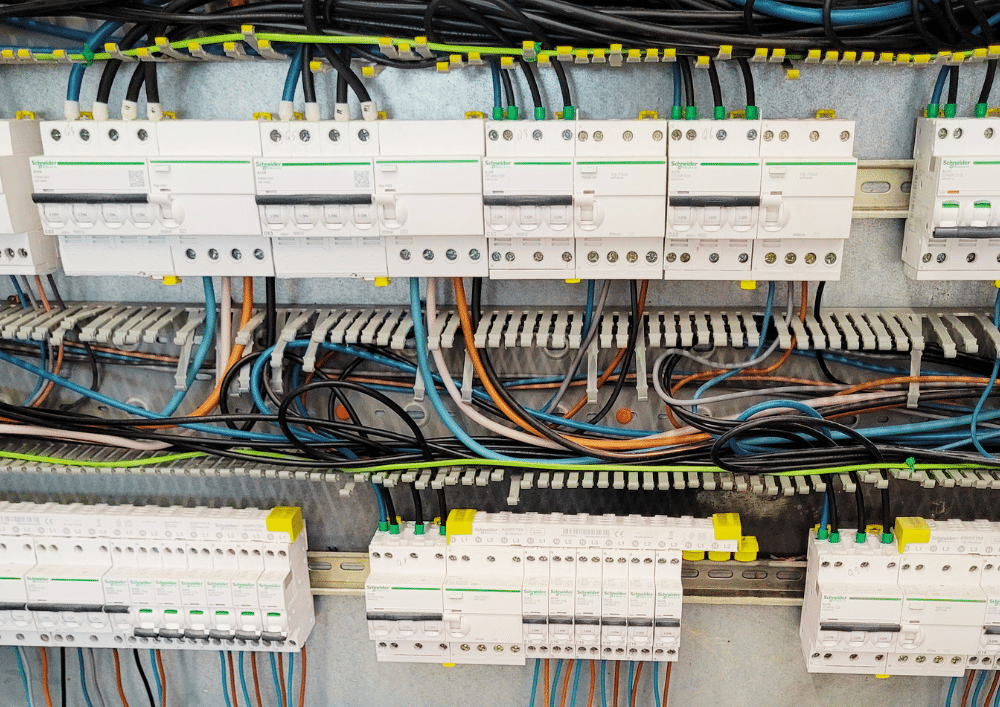
The system acts close to contactors, transformers, protection devices and connections.
Thermal detection
Cable follows hazard areas above equipment.
Automatic activation
Generator triggers when the local threshold is reached.
Aerosol distribution
Active particles spread throughout the enclosed volume.
Flame interruption
The chemical chain reaction sustaining combustion is interrupted.
Fire protection does not replace sealing and maintenance
The enclosure must retain a suitable protection rating and be installed in a controlled environment.
Condensation
Identify water ingress and temperature differences.
Chlorinated atmosphere
Chlorine and treatment products accelerate corrosion.
Cable glands
Check sealing around cable entries.
Plant-room ventilation
Avoid accumulation of moisture and heat.
Tightening checks
Inspect terminals, contactors and feeders.
Cleaning
Remove dust, deposits and corrosion.
Select from the actual panel, not pool size
Pool size does not directly determine the suppression model.
Put the pool installation into a safe state on activation
An interface can report the alarm or control an external device.
Pump stop
Command a contactor or compatible input.
Heating stop
Switch a feeder or safety input.
Panel isolation
Control an external device sized for the installation.
Activation reporting
Send information to alarm or supervision.
Dry contact
Interface with BMS, PLC or third-party system.
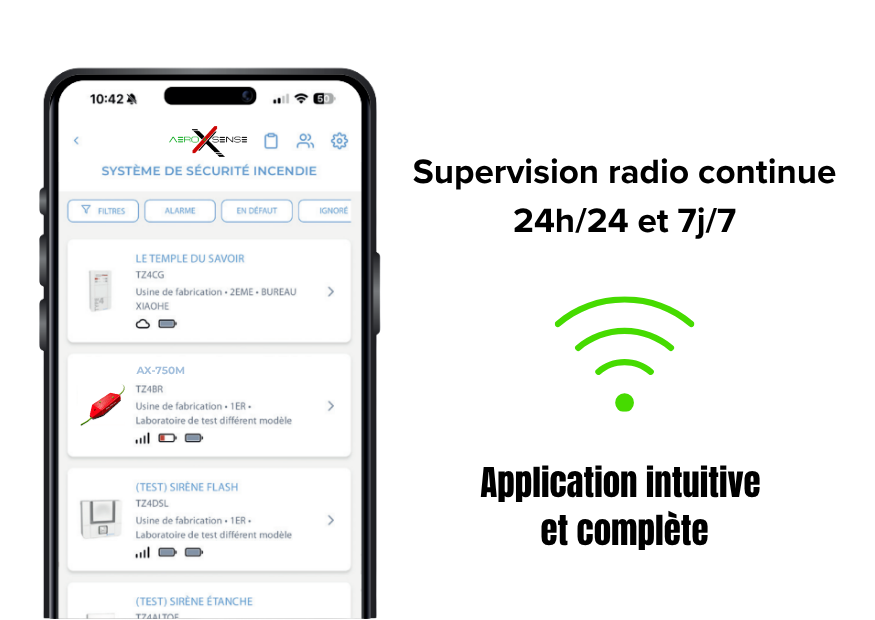
Radio and cloud
Status and notification depending on connected versions.
Which solution for each installation?
Pre-selection only; dimensions must be validated.
| Installation | Recommended solution | Key consideration |
|---|---|---|
| Small residential filtration panel | AX33 | Check width, volume and available space |
| Premium pool panel | AX33 + status reporting | Assess automation and power feeders |
| Private technical cabinet | AX150M | Check volume and ventilation |
| Collective pool, hotel or campsite | AX150M or several units | Assess every compartment |
| Plant room with several panels | Local or room protection | Compare cost and architecture |
| Highly ventilated panel or room | AX150M + ventilation shutdown | Coordinate airflow stop with activation |
Mistakes to avoid
Protection complements a sound electrical installation and proper maintenance.
Which pool systems are concerned?
Protection applies to private, collective and professional installations.
Private pools
Residential filtration panels and controls.
Hotels
Plant rooms, pumps and heating.
Campsites
Several pools and technical cabinets.
Residences
Collective pools and shared plant rooms.
Aquatic centres
Complex filtration and treatment cabinets.
Spas
Pumps, heating and controls.
Municipal pools
High-power systems and continuity requirements.
Condominiums
Collective panels and supervision.
Water parks
Multiple distributed installations.
Pool installers
Integration into customer panels.
Panel manufacturers
Factory integration or safety option.
Remote plant rooms
Automatic protection without staff presence.
Build a coherent strategy around the pool plant room
Electrical panels
Compact protection for panels and small enclosures.
Electrical cabinets
Protection for professional and collective cabinets.
Sizing
Choose between AX33, AX150M or several units.
Interfaces and shutdown
Pump, heating, ventilation shutdown and reporting.
Condensed aerosol
Understand the suppression technology.
Electrical rooms
Assess a complete pool plant room.
Professional ranges
Compare Habitat, Pro and Industry.
Instruction manual
Review installation rules.
Frequently asked questions about pool-panel fire protection
Quel système choisir pour un coffret électrique de piscine ?
L’AX33 convient à de nombreux coffrets résidentiels. L’AX150M est mieux adapté aux armoires et volumes plus importants. Les dimensions doivent toujours être vérifiées.
Pourquoi l’AX33 est-il adapté aux coffrets de piscine ?
Son format compact et sa détection linéaire permettent de couvrir de nombreux coffrets résidentiels installés sur plusieurs rangées.
Quand choisir l’AX150M ?
Pour une armoire plus volumineuse, une piscine collective, plusieurs équipements de puissance ou une installation nécessitant des interfaces professionnelles.
Le produit protège-t-il le local technique complet ?
Un produit installé dans un coffret protège principalement ce volume. Le local complet nécessite une étude spécifique.
Peut-on couper la pompe automatiquement ?
Oui via une interface commandant un contacteur ou une entrée externe compatible.
Peut-on arrêter le chauffage ou la pompe à chaleur ?
Oui, si un organe de coupure externe est prévu et dimensionné.
L’humidité empêche-t-elle l’installation ?
Elle impose une attention particulière à l’étanchéité, la corrosion, la condensation et l’état du coffret.
Le chlore peut-il dégrader le coffret ?
Oui. Les atmosphères chlorées peuvent accélérer la corrosion des connexions et composants.
Où installer le générateur ?
En partie haute, avec une zone de diffusion dégagée et la détection au-dessus des équipements à risque.
Comment positionner le câble thermosensible ?
Il doit suivre contacteurs, borniers, transformateurs, alimentations et départs de puissance.
Peut-on protéger plusieurs coffrets avec un seul générateur ?
Pas si les coffrets constituent des volumes séparés. Chaque enveloppe doit être étudiée.
Peut-on envoyer une alerte au propriétaire ou au gestionnaire ?
Oui avec les interfaces et versions connectées adaptées.
Le système remplace-t-il les protections électriques ?
Non. Disjoncteurs, différentiels, mise à la terre et conformité restent indispensables.
Quelle maintenance prévoir ?
Contrôle du coffret, des serrages, de l’humidité, du câble de détection et de la date de remplacement.
Que faire après une activation ?
Mettre hors tension, identifier la cause, inspecter, nettoyer, remplacer le système activé et valider la remise en service.
Do you have a pool panel or cabinet to protect?
Send internal dimensions, photographs, equipment, ventilation and shutdown or reporting needs. We will determine whether AX33, AX150M or a multiple-unit architecture is suitable.