Fire protection for battery cabinets, BMS and BESS energy storage systems
Battery energy storage systems, backup batteries, UPS installations and 48 V telecom infrastructures include many electrical cabinets containing BMS boards, contactors, converters, power supplies, rectifiers, fuses, relays and wiring. AeroXSense protects this equipment directly at the source of risk, detecting and treating an electrical fire start before it spreads through the cabinet or reaches neighbouring battery modules.
A distributed architecture makes it possible to act directly inside each strategic cabinet within the storage system.
Distinguishing lithium cells from the electrical environment
A battery system can present two different types of risk: internal thermal runaway within a cell and an electrical fire start in the control, conversion or power equipment.
Lithium cells
- Internal phenomenon within the cell
- Self-sustaining temperature rise
- Gas release
- Possible propagation between modules
The associated electrical cabinet
- BMS boards
- Contactors and fuses
- Converters and power supplies
- Relays, terminals and wiring
- Monitoring electronics
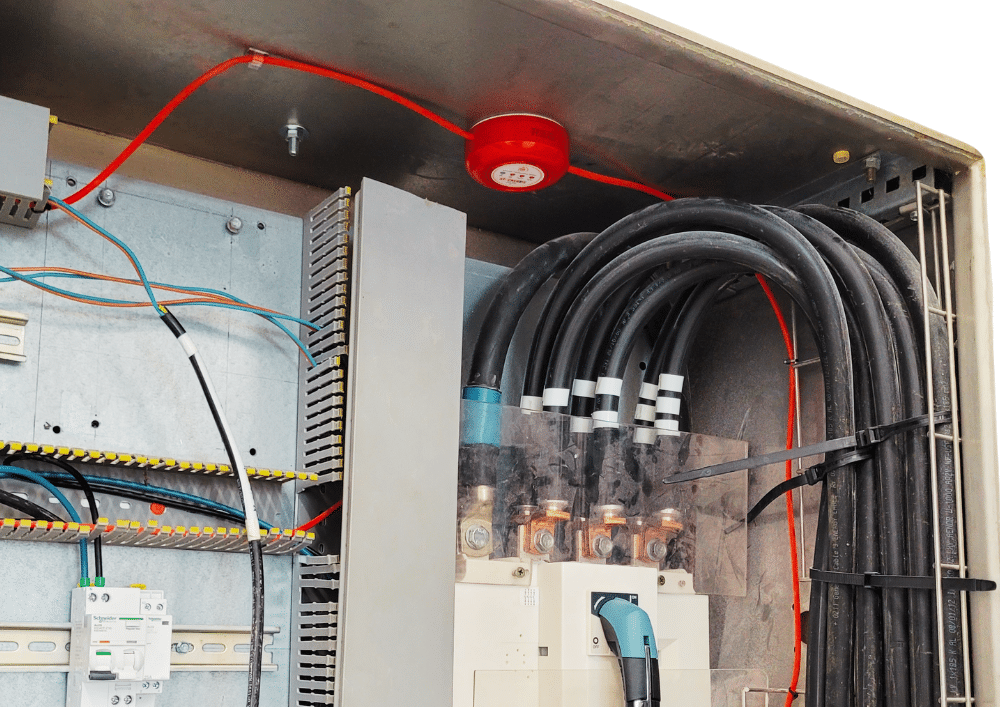
Acting directly at the heart of the risk in every strategic cabinet
A BESS is not one single large volume. It includes several critical cabinets and compartments. AeroXSense uses distributed protection, with detection and suppression installed directly inside each relevant enclosure.
BMS cabinet
Protection of management and monitoring boards.
Converter cabinet
Protection of power electronics and power supplies.
Auxiliary cabinet
Protection of relays, fuses, chargers and associated services.
Independent protection
Detection and suppression as close as possible to the fire start.
Detecting the first small flame before propagation
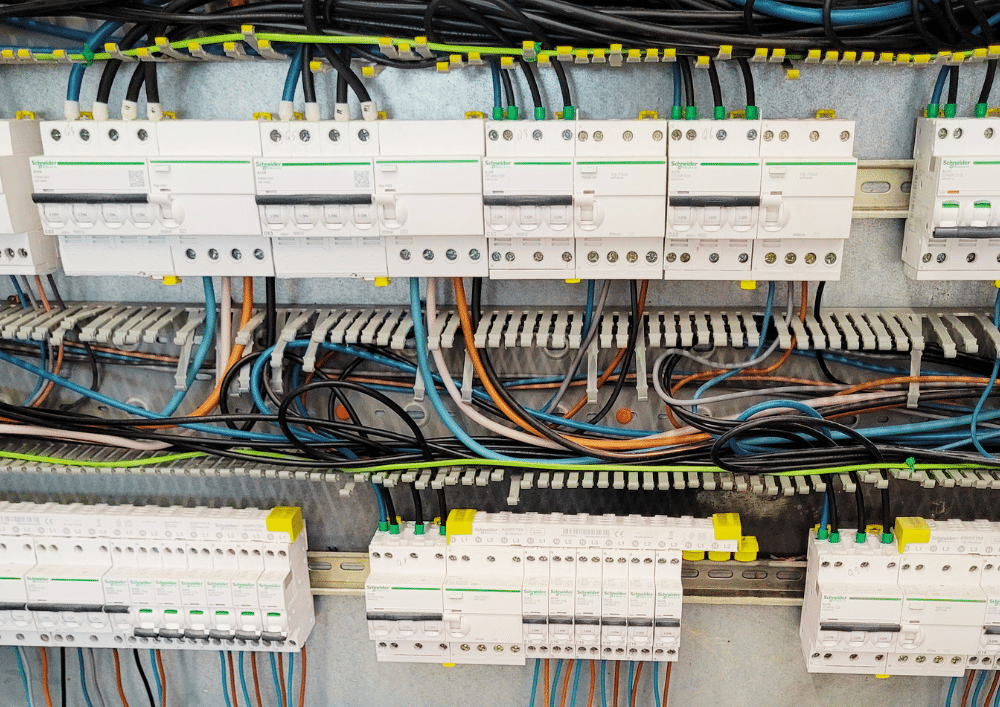
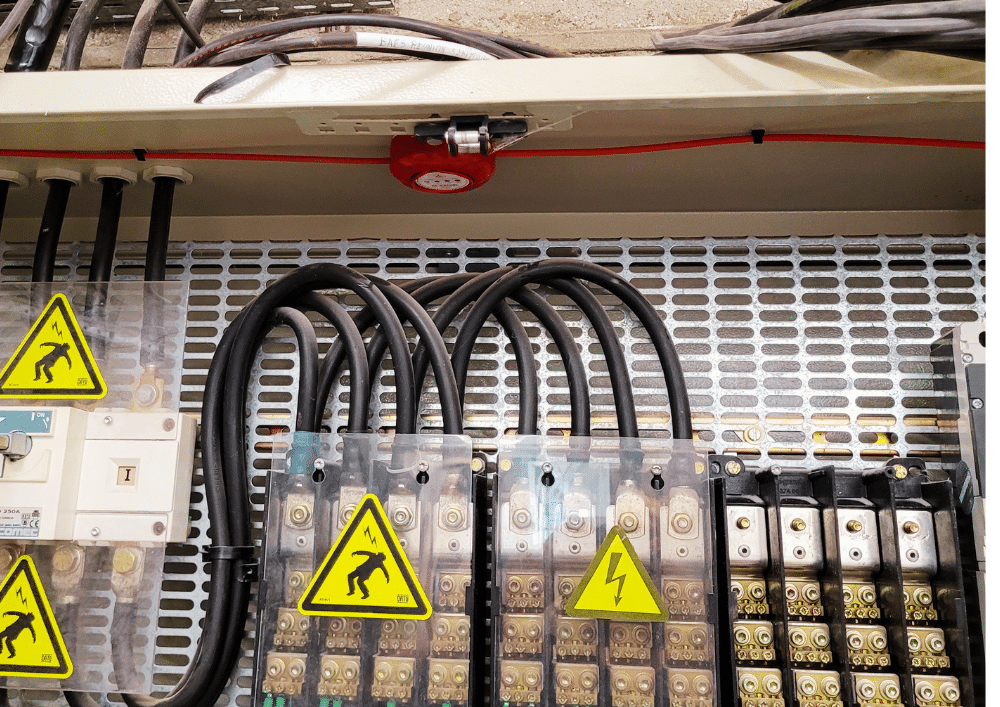
Linear heat detection is installed directly above the risk areas. The objective is to intervene while the flame is still very small, comparable to a lighter or a match, before nearby cables and components become involved.
Fast response
Detection is installed inside the volume where the fire starts.
No need to wait for room detection
The system does not wait for smoke to leave the cabinet.
Limited damage
The objective is to act before neighbouring equipment becomes involved.
Breaking the combustion chain reaction
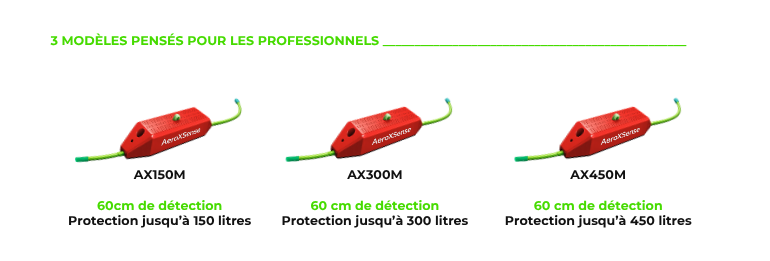
Condensed aerosol acts mainly by chemically inhibiting the radical chain reactions that sustain the flame. Rapid suppression reduces fire intensity and limits external heat input to neighbouring equipment.
Chemical inhibition
The combustion chain reactions are interrupted.
Rapid suppression
The flame is neutralised during the earliest stages.
Reduced heat input
Removing the flame reduces heat transfer inside the cabinet.
Limited collateral damage
Boards, cables and neighbouring components are less exposed.
Limiting heat transfer to modules that are not yet involved
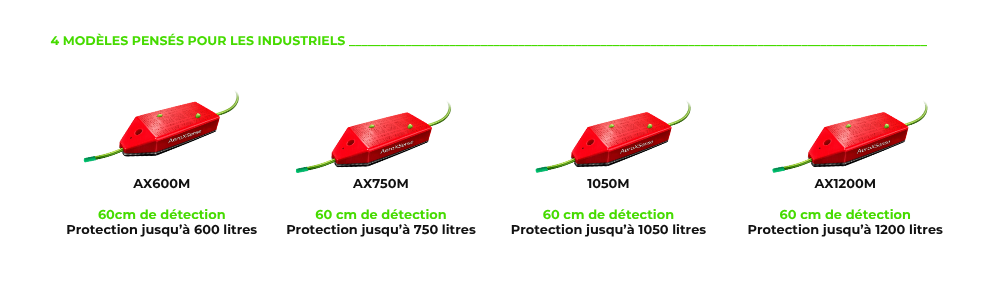
When a fire starts in the BMS, converter, contactor or terminal area, very early suppression can avoid or delay involvement of nearby battery modules. Rapid flame removal reduces external heat input and can limit the extent of the incident.
Delayed propagation
Modules not yet involved receive less external heat.
Better temperature control
The immediate environment remains less exposed.
Reduced collateral damage
Adjacent compartments may remain protected for longer.
Valuable response time
Emergency teams gain an additional intervention window.
Supporting firefighters and site teams when they arrive
Early suppression inside the cabinet can reduce flame intensity, limit external heat input and slow propagation toward neighbouring equipment.
Fewer flames
The initial electrical fire is treated quickly.
Lower heat exposure
Adjacent compartments are less exposed.
Slower propagation
The incident may remain more localised.
Easier intervention
Responders may face a less developed scenario on arrival.
Electrical and electronic components that can be protected
BMS boards
Management, measurement and balancing functions.
Converters
AC/DC and DC/DC power electronics.
UPS systems and chargers
Uninterruptible power and charging equipment.
Contactors and relays
Control, isolation and switching devices.
Fuses and terminals
Electrical connection and protection points.
48 V rectifiers
Telecom and backup infrastructures.
DC cabinets
Direct-current distribution and protection.
AC cabinets
Alternating-current distribution and auxiliary systems.
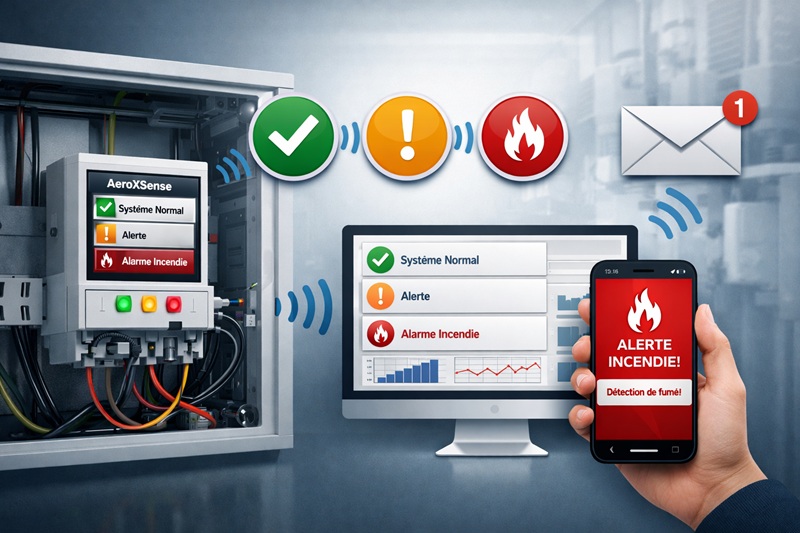
Integration with BMS, SCADA, fire alarm and radio systems
Local protection can be combined with reporting, shutdown and monitoring functions adapted to the site architecture.
BMS / SCADA reporting
Status transmission to technical management systems.
Fire alarm interface
Possible integration into the site fire strategy.
Dry contact
Activation reporting to PLC or supervision.
Radio communication
Suitable for remote or distributed sites.
Electrical shutdown
External control of contactors or power devices.
Ventilation shutdown
Helps retain the agent inside the protected cabinet.
Local monitoring
Status reporting to operators and maintenance teams.
Scalable architecture
Adaptation to present and future site needs.
Adapting the strategy to airflow and extract systems
BMS, converter and UPS cabinets are often ventilated. Airflow can reduce agent holding time and must be included in the sizing study.
Natural ventilation
Openings and grilles must be considered.
Forced ventilation
Fan airflow must be assessed.
Extraction
The risk of rapid agent removal must be evaluated.
Automatic shutdown
Coordinated stopping may be required.
Every BMS or BESS cabinet requires a specific study
System selection is not based on volume alone. Width, compartments, ventilation, obstacles and proximity to battery modules must also be considered.
| Criterion | Why does it matter? |
|---|---|
| Volume | Determines the minimum extinguishing capacity. |
| Width | Determines coverage and the number of generators. |
| Compartments | May block distribution and create several protection zones. |
| Ventilation | Affects agent retention inside the cabinet. |
| Obstacles | May restrict distribution between equipment. |
| Power areas | Define the linear detection route. |
| Distance to battery modules | Influences the strategy for limiting external heat input. |
| Interfaces | Enable shutdown, reporting and monitoring. |
What AeroXSense can protect — and what the system does not claim to do
What the solution can do
- Detect an electrical fire start inside the cabinet
- Act very early on a small flame
- Limit propagation toward neighbouring equipment
- Reduce external heat input
- Protect BMS boards, converters, relays and wiring
- Report information to BMS, SCADA, fire alarm or radio systems
What the solution should not promise
- Guarantee the stopping of an internal thermal runaway already underway
- Replace the overall BESS risk assessment
- Remove the need for compartmentation or general detection
- Protect without a prior study of volume, ventilation and architecture
Explore protection for associated equipment
Electrical cabinets
Local protection of electrical enclosures.
Photovoltaic systems
Protection of electrical equipment in PV installations.
Photovoltaic inverters
Power electronics and AC/DC terminals.
IT racks
Power supplies, PDU and UPS equipment.
Telecom cabinets
48 V systems and remote sites.
Linear detection
Heat-sensitive cable installation.
Condensed aerosol
Chemical inhibition of combustion.
Selection guide
Choose a suitable architecture.
Fire protection for battery cabinets and BMS systems
Can AeroXSense protect a BMS cabinet?
What is the difference between protecting the BMS and protecting lithium cells?
Can a 48 V telecom battery cabinet be protected?
Can a UPS or inverter be protected?
How does condensed aerosol work?
Is a ventilated cabinet compatible?
How is a battery cabinet protection system sized?
Can the system be connected to BMS, SCADA or a fire alarm system?
Protect the strategic cabinets in your energy storage system
Our team defines the required capacity, generator installation, detection route and interfaces suited to your installation.