Fire suppression system for EV charging stations and infrastructure
AeroXFireshield automatically detects and suppresses fire in electrical volumes associated with charging infrastructure: dedicated panels, protection enclosures, distribution cabinets, load-management equipment and compatible technical compartments.
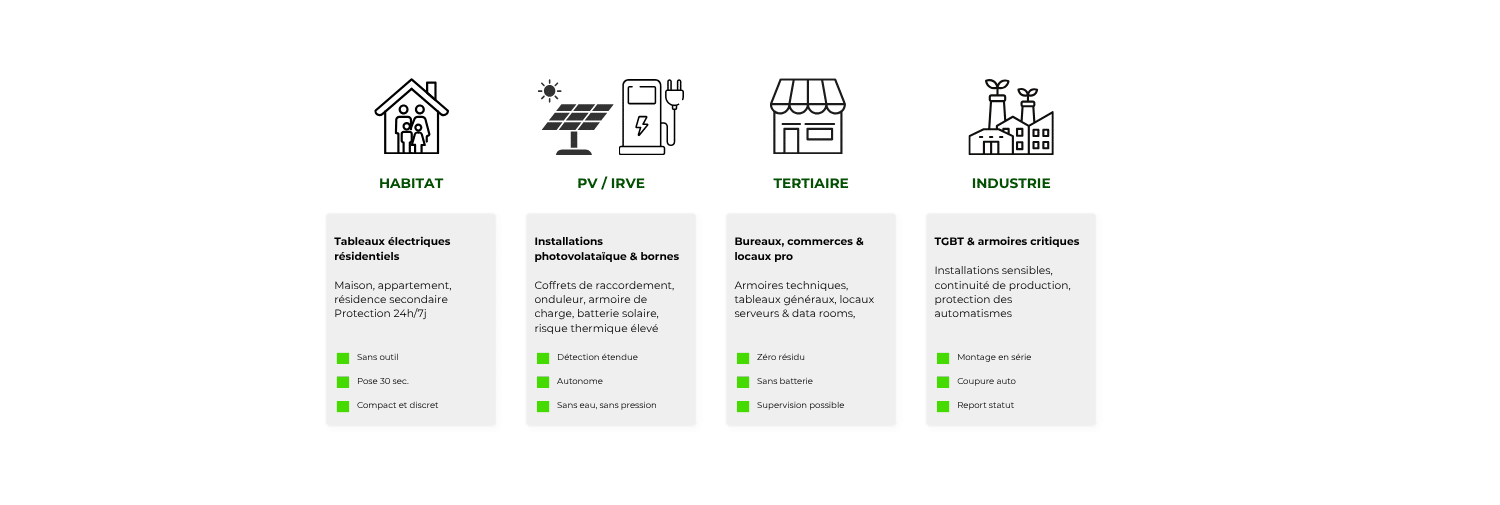
Fire protection for electrical equipment associated with electric-vehicle charging infrastructure.
Where can fires begin?
Charging infrastructure combines high power, repeated cycles, contactors, protection devices, cabling and control electronics. Loose connections, degraded components or sustained overheating may cause a fire inside a technical volume.
Power terminals
Loose or aged connections can create contact resistance and a hot spot.
Contactors and relays
Repeated switching cycles place stress on contacts and power components.
Protection devices and feeders
Breakers, residual-current devices, surge protection or disconnectors may fail internally.
Cabling and connections
Damaged, undersized or poorly connected conductors may overheat.
Control electronics
Power supplies, communication boards and load-management equipment are grouped in technical compartments.
Ventilation and environment
Dust, humidity, heat, impact and airflow affect equipment ageing.
Which EV-charging equipment can be assessed?
Compatibility depends on the closed or semi-closed volume, ventilation, accessibility and equipment geometry.
Dedicated panel or small enclosure
- Residential charger protection panel
- Small connection or load-shedding enclosure
- Compatible closed equipment
- Selection by width and volume
EV-charging enclosure or cabinet
- Multi-point distribution cabinets
- Protection and control enclosures
- Compatible charger technical compartments
- Linear detection above power areas
Charging hubs and complex infrastructure
- Several cabinets or compartments
- High-power central distribution
- Supervision, shutdown and status reporting
- Whole-room assessment where required
Distinguish electrical-equipment fire from vehicle fire
This distinction is essential to present the system accurately and define the role of each safety measure.
EV-charging electrical equipment
- Associated panel, enclosure or cabinet
- Terminals, protection devices, contactors and electronics
- Closed volume suitable for local detection
- Status reporting and external shutdown possible
Vehicle and traction battery
- Specific thermal-runaway hazard
- Stored energy inside vehicle cells
- Fire may develop independently of charging cabinet
- Requires parking procedures and emergency-response measures
Detect heat and act directly inside the technical volume
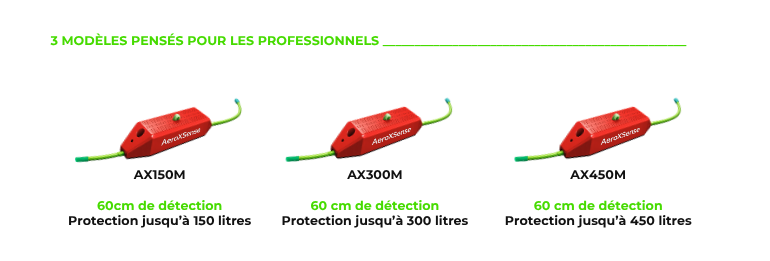
AeroXFireshield combines local thermal detection with a condensed-aerosol generator sized for the panel, enclosure or cabinet.
Monitor power areas
Heat-sensitive cable is positioned above terminals, contactors and protection devices.
Automatic activation
When the local thermal threshold is reached, the generator activates without human intervention.
Aerosol distribution
The solid formulation produces active particles throughout the enclosed volume.
Flame interruption
The particles mainly interrupt the chemical reaction sustaining combustion.
Select the model from the actual equipment
Charging power alone does not determine the suppression system. Sizing depends on the geometry and volume of the protected compartment.
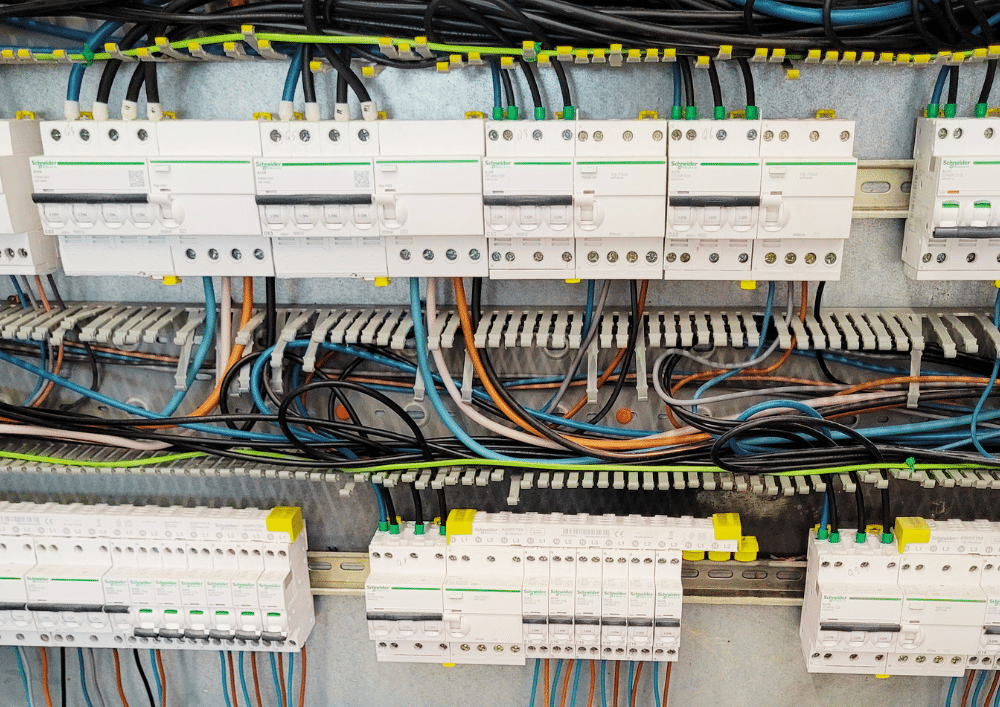
Adapt protection to the charging infrastructure
A residential wallbox, a condominium and a rapid-charging hub do not have the same architecture or requirements.
| Installation type | Equipment to protect | Likely approach |
|---|---|---|
| Individual residential charger | Associated panel or small enclosure | Habitat or small Pro model depending on volume |
| Condominium with several points | EV panel, load-management enclosure or distribution cabinet | Pro with status reporting and possible shutdown |
| Company car park | Multi-feeder cabinet and supervision | Pro or Industry depending on volume and compartments |
| Shopping centre or public parking | Several cabinets, central management and business continuity | Multiple-unit architecture and supervision |
| DC fast charging | Highly ventilated power equipment | Specific assessment with charger manufacturer |
| Technical room serving several chargers | Several systems in one space | Local, whole-room or combined protection |
Integrate AeroXFireshield with charging-infrastructure management
Depending on the project, interfaces can report activation, stop ventilation or control an external de-energisation device.
Activation reporting
Send information to an alarm, PLC, parking supervision or operator.
Dry contact
Interface with BMS, load-management system or third-party equipment.
Shutdown command
Possible control of a contactor, motorised breaker or compatible safety input.
Ventilation stop
Possible safe-state control to reduce agent loss.
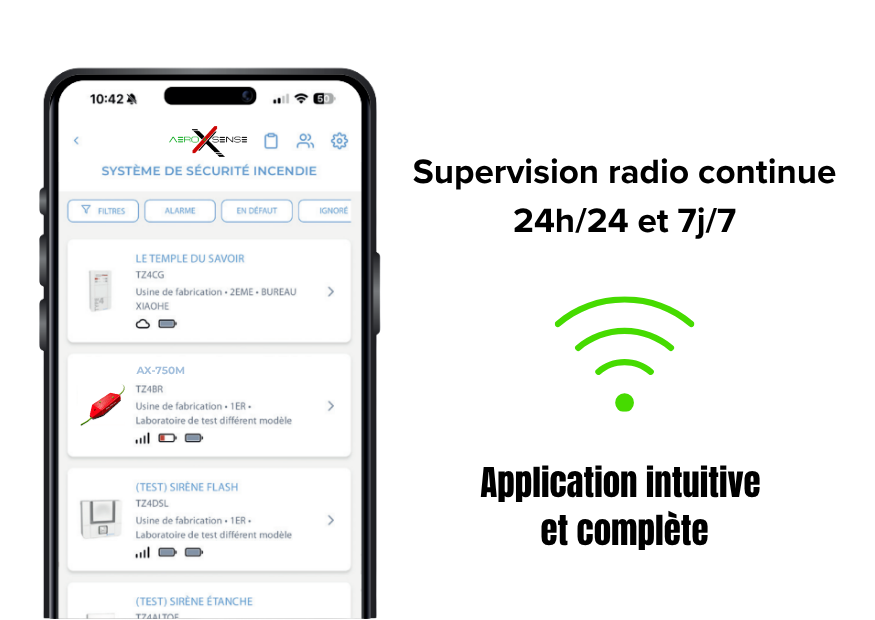
Radio and cloud connectivity
Status reporting and mobile notifications depending on connected versions.
Multi-site management
Supervise several cabinets or car parks depending on architecture and service.
What the system does not replace
A credible solution must be presented as an additional safety layer, not a universal answer to every electric-vehicle risk.
Which EV-charging projects are concerned?
Protection can be assessed for residential, commercial, public or industrial installations with identified electrical volumes.
Single-family homes
Panel or enclosure associated with a wallbox.
Condominiums
Distribution cabinets, load management and multiple charging feeders.
Companies and fleets
Employee parking, service vehicles and central management.
Hotels and residences
Guest chargers, dedicated panels and technical rooms.
Shopping centres
Multi-point charging hubs with supervision and high traffic.
Local authorities
Public parking, municipal buildings and shared infrastructure.
Underground car parks
Electrical equipment grouped in sensitive technical spaces.
Depots and logistics
Fleet charging with strong business-continuity requirements.
Build a coherent strategy around the EV-charging project
Electrical panels
Compact protection for panels and small enclosures serving chargers.
Electrical cabinets
Local protection for distribution and control cabinets.
Sizing
Select the model by volume, width, height, ventilation and compartments.
Interfaces and shutdown
Status reporting, dry contact, de-energisation and supervision.
Condensed aerosol
Understand how the extinguishing agent is generated and works.
Electrical rooms
Assess whole-room protection where several systems share one space.
Lithium batteries
Distinguish electrical-equipment protection from vehicle-battery risk.
Professional ranges
Compare Habitat, Pro and Industry by application.
Frequently asked questions about EV-charging fire protection
Comment protéger une borne de recharge contre l’incendie ?
La prévention associe une installation conforme, des protections correctement dimensionnées, une maintenance régulière et, lorsque le risque le justifie, une détection et une extinction automatiques dans le tableau, le coffret ou le compartiment technique.
AeroXFireshield protège-t-il la batterie du véhicule ?
Non. La solution protège les équipements électriques IRVE compatibles. La batterie de traction présente un risque spécifique qui nécessite les moyens et procédures adaptés.
Peut-on installer le système directement dans une borne ?
Cela dépend de la conception de la borne, de son volume, de sa ventilation, de l’accès interne et des exigences du fabricant. Une validation technique est indispensable.
Quel système utiliser pour un tableau IRVE ?
Le choix dépend de la largeur, du volume, du nombre de rangées, des zones de puissance et du parcours de détection. Les petits tableaux peuvent relever d’Habitat, les armoires généralement de Pro ou Industrie.
La puissance de la borne suffit-elle pour dimensionner le système ?
Non. Une borne de 7,4 kW, 22 kW ou plus ne détermine pas directement la capacité d’extinction. Le volume et la géométrie de l’enveloppe sont les critères essentiels.
Le système peut-il couper automatiquement la recharge ?
Une interface peut commander un contacteur, un disjoncteur motorisé ou une entrée de sécurité compatible. L’organe de coupure doit être étudié et dimensionné séparément.
Peut-on envoyer l’alarme vers la supervision du parking ?
Oui, selon l’architecture, via un contact sec, un automate ou une interface adaptée.
Peut-on protéger une borne ventilée ?
Dans certaines configurations, mais le flux d’air peut entraîner l’agent. Une étude de la ventilation et de son arrêt éventuel est nécessaire.
Comment protéger plusieurs bornes dans une copropriété ?
La protection porte généralement sur le tableau ou l’armoire commune, les coffrets de délestage et, si nécessaire, les compartiments techniques des bornes compatibles.
Faut-il plusieurs générateurs dans une grande armoire IRVE ?
Oui lorsque la largeur, le volume, la hauteur ou les compartiments dépassent la capacité d’une seule unité.
La protection remplace-t-elle les protections électriques ?
Non. Disjoncteurs, différentiels, parafoudres, sectionnement, mise à la terre et conformité de l’installation restent indispensables.
Que se passe-t-il après une activation ?
L’installation doit être mise en sécurité, inspectée, nettoyée selon les procédures applicables et remise en service par des professionnels après identification de la cause.
Peut-on superviser plusieurs parkings ?
Oui avec les versions et services adaptés, sous réserve de couverture réseau, d’enregistrement des équipements et de droits d’accès configurés.
Quelle différence entre protection du coffret et protection du parking ?
La protection du coffret agit dans le volume électrique. La sécurité du parking doit également traiter les véhicules, l’évacuation, la détection générale et l’intervention des secours.
Quelles informations transmettre pour une étude ?
Dimensions intérieures, photos, schéma unifilaire, puissance, nombre de points de charge, ventilation, compartiments et besoins de report ou de coupure.
Do you have an EV charger, enclosure or cabinet to protect?
Send internal dimensions, photographs, single-line diagram, ventilation, compartments and number of charging points. We will determine the protectable scope, suitable model and integration interfaces.