Fire suppression system for HVAC and ventilation control panels
AeroXFireshield automatically detects and suppresses fire inside ventilation panels, AHU control cabinets and HVAC equipment. AX33 suits compact panels, while AX150M addresses larger professional cabinets.
Why can ventilation panels overheat or catch fire?
HVAC equipment combines motors, drives, relays, controls and long operating hours.
Motors and fans
Mechanical blockage or overload may cause overheating.
Variable-speed drives
Power electronics and capacitors are highly stressed.
Contactors and relays
Repeated switching degrades contacts.
Terminals and connections
Loose tightening creates hot spots.
Power supplies
Control circuits may overheat.
Dirty filters
Reduced airflow can stress motors.
Dust
Deposits promote overheating and faults.
Continuous operation
Some systems run around the clock.
AX33 or AX150M for HVAC panels
The same technology can protect a compact panel or a complete AHU cabinet.
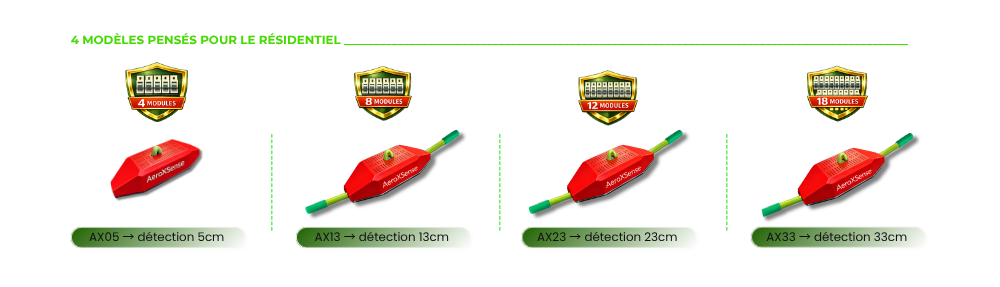
AX33 — compact ventilation panels
- Compact format
- Linear detection across the panel
- Top-mounted installation
- Selection by volume and width
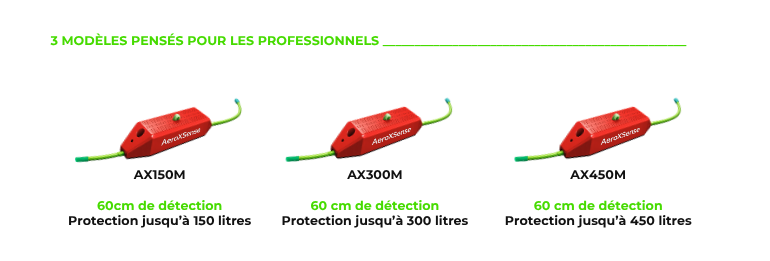
AX150M — AHU and HVAC cabinets
- Capacity for larger volumes
- Remote detection possible
- Status reporting and external shutdown
- Several units where required
Detect heat and act inside the control cabinet
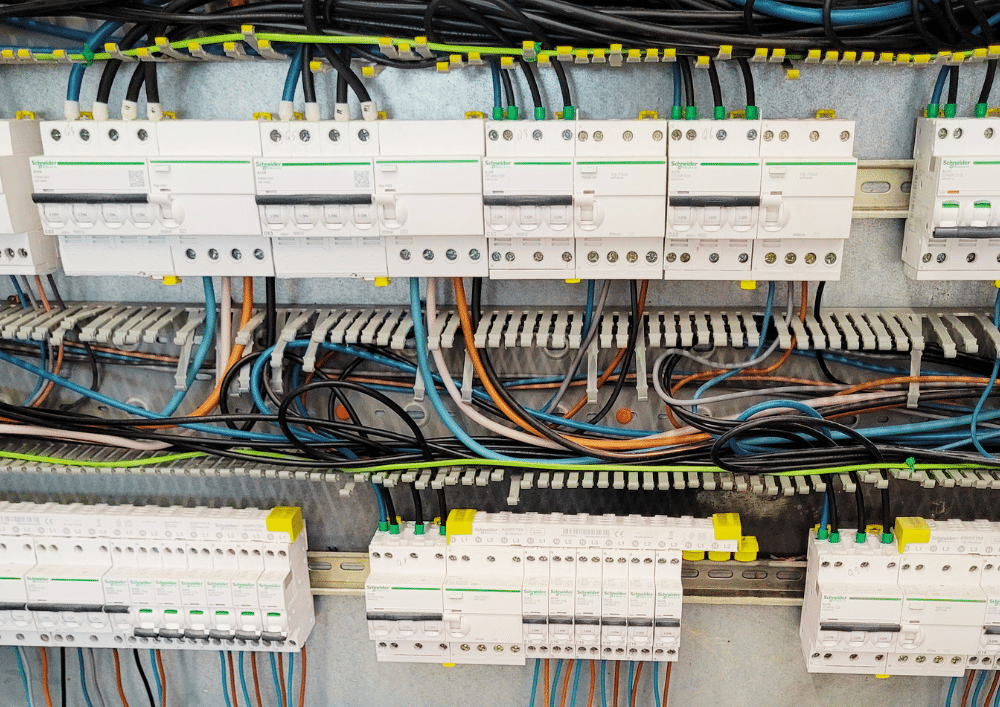
The system acts close to motors, drives, contactors, power supplies and connections.
1. Thermal detection
The cable follows components likely to overheat.
2. Fan shutdown
The interface stops the relevant fans or extractors.
3. Generator activation
Aerosol is distributed inside the stabilised volume.
4. Flame interruption
The particles interrupt the combustion chain reaction.
Coordinate airflow shutdown with suppression activation
In highly ventilated cabinets, airflow may carry aerosol out of the useful volume.
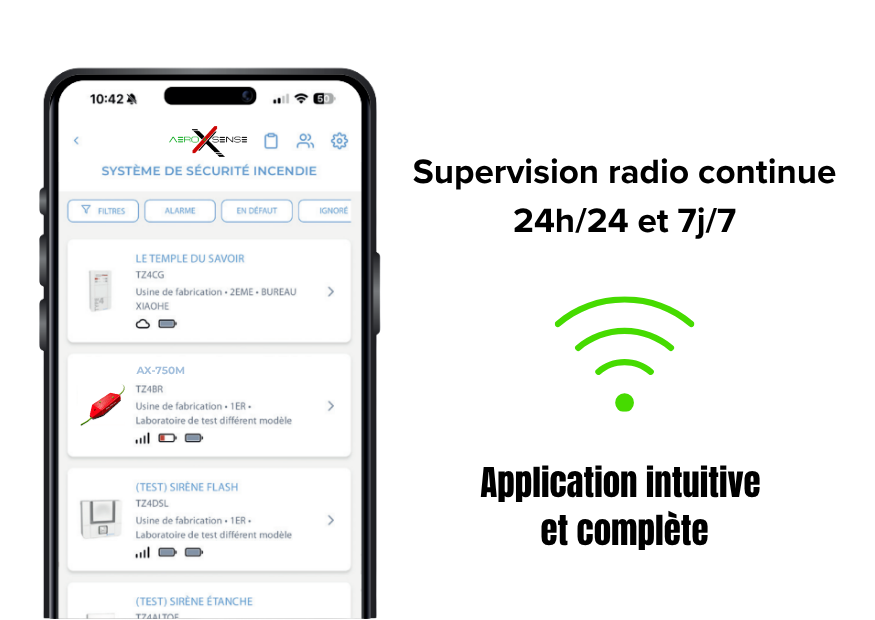
Thermal detection → fan or extractor shutdown → generator activation → status reporting to BMS or supervision.
Equipment type alone does not determine the model
Selection depends on geometry, ventilation, compartments and equipment layout.
Internal dimensions
Measure usable width, height and depth.
Compartments
Separate power, control and drive sections.
Internal ventilation
Identify fans, grilles and extractors.
Equipment density
Drives and cables may obstruct distribution.
Hazard position
Locate motors, drives, terminals and supplies.
Ambient temperature
Consider technical-room conditions.
Several cabinets
Compare local and room-wide protection.
Multiple units
Use several generators where required.
Integrate suppression into HVAC operation
An interface can report activation or control an external safety device.
Fan stop
Command a contactor or safety input.
Extractor stop
Coordinate shutdown with activation.
Drive shutdown
Control a compatible external device.
BMS reporting
Send a technical alarm.
Dry contact
Interface with PLC or fire system.
Radio and cloud
Status reporting on connected versions.
Which solution for each HVAC installation?
| Installation | Recommended solution | Key consideration |
|---|---|---|
| Small residential ventilation panel | AX33 | Check width, volume and top space |
| Compact commercial panel | AX33 or AX150M | Assess density and ventilation |
| AHU control cabinet | AX150M or several units | Assess compartments and airflow |
| Cabinet with drives | Pro range | Identify hot spots and ventilation |
| Plant room with several cabinets | Local or room protection | Compare architectures |
| Highly ventilated cabinet | AX150M + fan shutdown | Coordinate shutdown and activation |
What the system must not imply
Panel protection does not replace HVAC maintenance or duct protection.
Panel is not the duct network
The system protects the electrical volume.
Ventilation left running
Airflow may remove aerosol.
Selection by volume alone
Width, height and obstacles matter.
Ignoring motors and filters
Mechanical faults may remain.
Installation far from hazards
Detection may be delayed.
Cable is not capacity
Longer cable does not increase output.
Assuming automatic shutdown
An external device is required.
Immediate restart
Inspection and cleaning are required.
Which HVAC systems are concerned?
Protection can be assessed for residential, commercial and industrial systems.
Single- and double-flow ventilation
Control panels and power supplies.
Air-handling units
AHU cabinets and controls.
Hotels
Ventilation and air conditioning.
Hospitals
AHUs and technical ventilation.
Offices
HVAC cabinets and BMS.
Industry
Process ventilation and extraction.
Car parks
Mechanical ventilation and extractors.
Commercial kitchens
Extraction controls.
Shopping centres
Distributed AHUs.
Logistics
Ventilation and refrigeration.
Schools
Fresh-air systems.
Public buildings
HVAC cabinets and supervision.
Build a coherent strategy around HVAC equipment
Electrical cabinets
Local protection for control and power cabinets.
Control cabinets
Compare with drives and automation.
Sizing
Choose AX33, AX150M or several units.
Interfaces and shutdown
Fan stop and BMS reporting.
Condensed aerosol
Understand the technology.
Electrical rooms
Assess a complete technical room.
Professional ranges
Compare Habitat, Pro and Industry.
Contact
Send project information.
Frequently asked questions about HVAC-panel fire protection
How do you protect a ventilation panel from fire?
Is AX33 suitable for a ventilation panel?
When should AX150M be used?
Must ventilation stop during activation?
Does the system protect ducts?
Can a fan stop automatically?
Can activation report to the BMS?
Where should the thermal cable be installed?
Can a compartmented cabinet be protected?
Do permanent grilles matter?
Does the system replace maintenance?
Can one unit protect several cabinets?
Does a longer cable increase capacity?
What happens after activation?
What information is needed?
Do you have a ventilation panel or HVAC cabinet to protect?
Send dimensions, photographs, ventilation details, motors, drives and reporting or shutdown requirements.
