
Linear heat detection cable: monitor the full width of risk areas
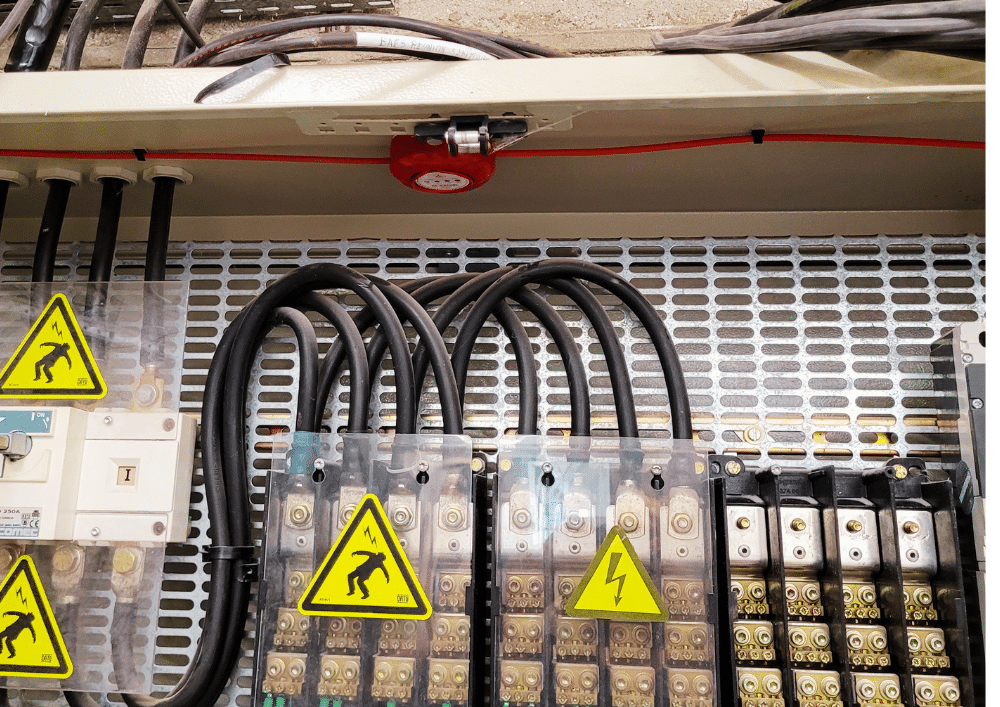
Inside an electrical cabinet, a fire can begin at a terminal, contactor, drive, power supply or connection located far from a point sensor. Linear heat detection follows the actual risk areas to identify a local temperature rise quickly and activate the associated protection.
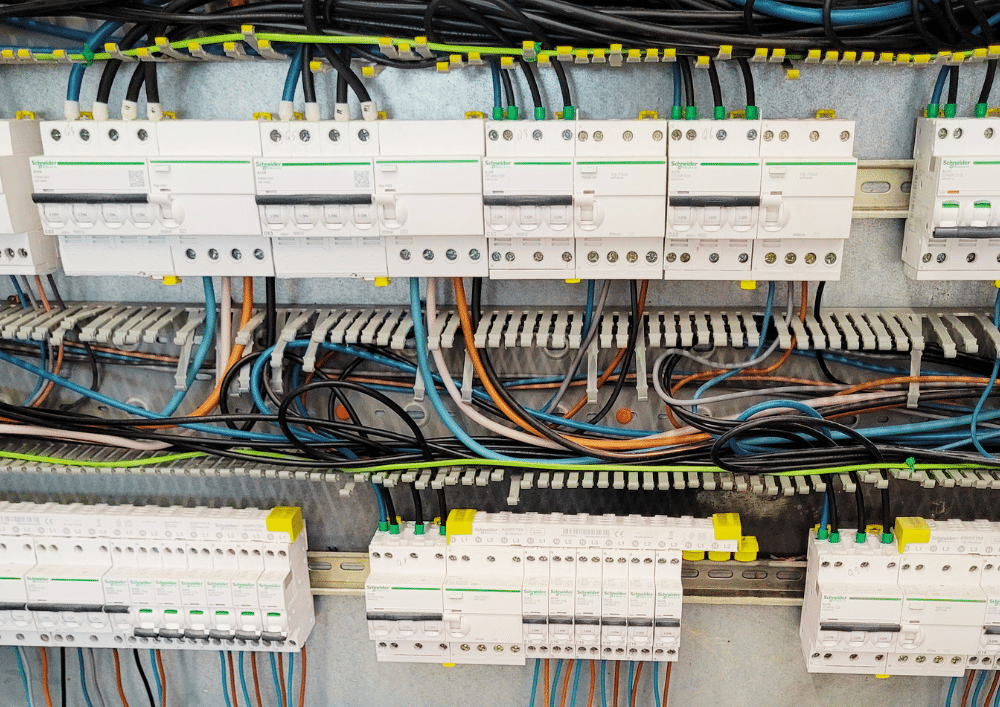
Detection follows the most exposed components and connections instead of monitoring one fixed point.
What is linear heat detection?
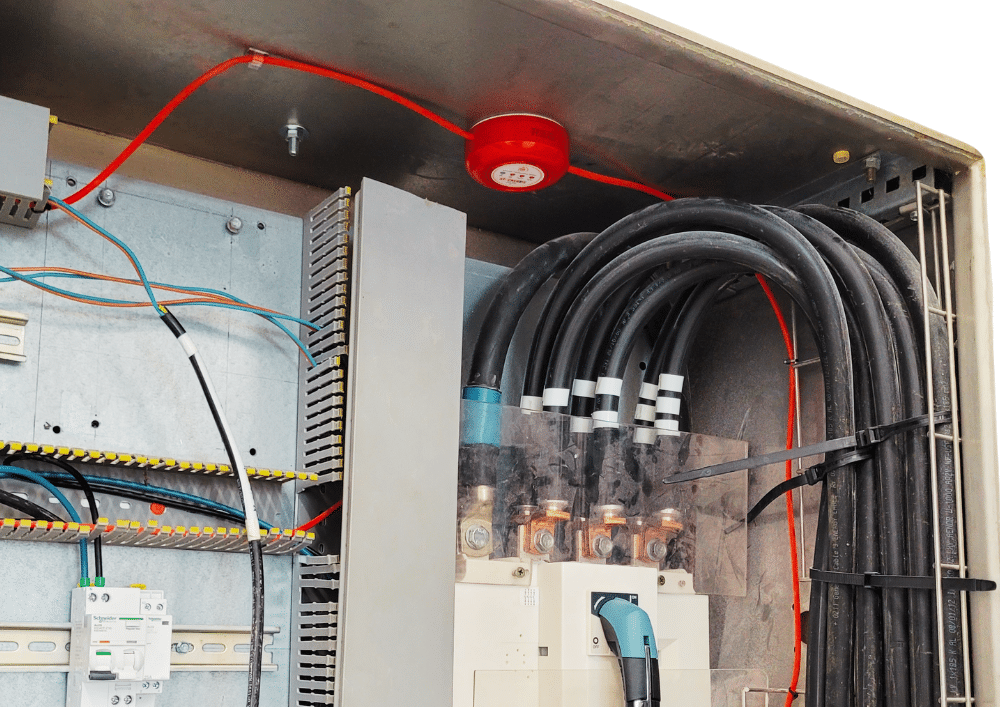
It is a continuous detection element that reacts when a point along its route reaches a defined thermal condition. Unlike a sensor installed at one location, the cable monitors the full installed length.
Continuous detection
Every correctly positioned section contributes to monitoring.
Close to the risk
The cable is routed above or near terminals and critical components.
Thermal response
Activation depends on the local thermal condition along the route.
Associated control
Depending on architecture, detection can trigger suppression, shutdown or reporting.
Why can a single sensor be insufficient?
A point sensor only measures its immediate environment. In a wide, tall or compartmented cabinet, a distant hotspot may not immediately raise the temperature at the sensor.
| Criterion | Point sensor | Linear heat detection cable |
|---|---|---|
| Monitored area | One fixed location. | The complete correctly routed cable length. |
| Wide cabinet | Potentially far from the fire origin. | The route can cover the full enclosure width. |
| Several rows | One sensor does not follow each level. | Cable can pass above several risk areas. |
| Obstacles and partitions | Heat may remain trapped in a distant zone. | Routing can be adapted to accessible compartments. |
| Local response | Depends on heat reaching the sensor. | Response close to the encountered hotspot. |
| Installation | Simple but highly dependent on position. | Requires studied routing and reliable fixing. |
How should the cable be routed inside an electrical cabinet?
The cable should not be installed randomly. It must follow areas likely to overheat while remaining compatible with maintenance and manufacturer clearances.
Identify risk areas
Terminals, protection devices, contactors, drives, power supplies and power points.
Cover useful width
The route must reach areas distributed across the enclosure width.
Follow the rows
When several levels are exposed, cable must pass above the relevant areas.
Fix without stress
Fixings must hold the cable without crushing, pinching or blocking maintenance.
Why cabinet width changes the solution
Two cabinets with the same volume may need different layouts. A very wide enclosure or several rows may require more detection length, another model or several devices.
Compact enclosure
A short route can cover key terminals and protection devices.
Wide panel
Detection must reach risk areas at both ends.
Several rows
Each significant level must be included in the route.
Separated compartments
Separate detection or protection may be required for each cell.
Installation faults that reduce effectiveness
Poor routing can delay detection or create a false impression of coverage.
Cable looped in one place
Concentrating the full length in one area does not protect the whole cabinet.
Route too far away
The cable must remain close to components likely to overheat.
Width not covered
Stopping in the centre leaves side areas without direct monitoring.
Rows ignored
One top line may be insufficient for several distinct levels.
Cable pinched or tensioned
Mechanical stress can damage the system or compromise installation.
Maintenance blocked
Routing must not prevent access to protection devices and terminals.
Where can linear heat detection be used?
This technology is particularly suitable for electrical volumes where risk sources are distributed.
Electrical panels
Several rows of protection devices and terminals across the width.
Industrial cabinets
PLCs, relays, contactors, drives and power supplies.
Main switchboards
Cells or compartments requiring zone-by-zone assessment.
Photovoltaic inverters
Power electronics, AC/DC terminals and ventilated sections.
IT racks
PDU, power supplies, UPS and network equipment.
Technical enclosures
HVAC, pool, telecom and remote equipment.
Effective detection strengthens the whole protection chain
Early detection allows suppression before fire spreads to other components or leaves the enclosure. Detection must therefore be considered together with sizing, agent distribution and interfaces.
Fast activation
Reduces time between fire start and generator activation.
Action at the source
Protection acts inside the volume where the risk appears.
Associated shutdown
An interface can control a contactor or ventilation stop.
Event reporting
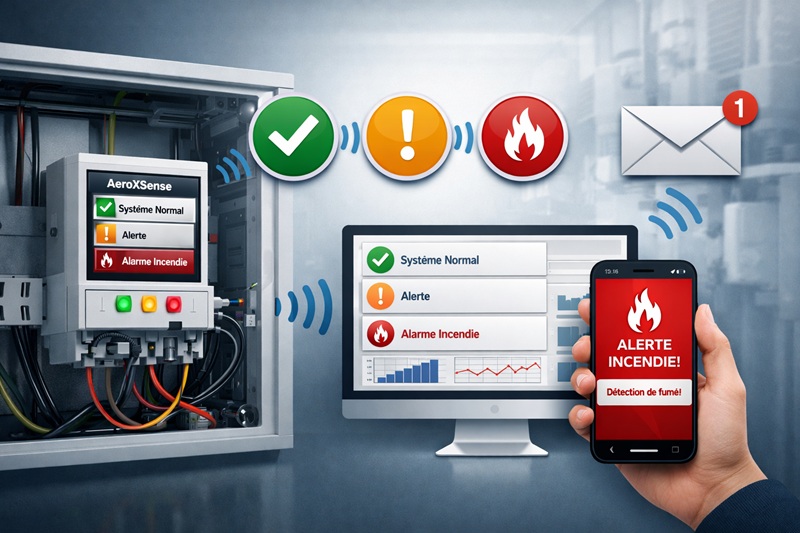
Activation can be sent to BMS, SCADA, fire alarm or monitoring.
Explore sizing and applications
These pages complete the detection and automatic protection study.
Electrical cabinets
Understand the complete fire suppression architecture.
Sizing
Select a model according to volume, width and compartments.
Professional ranges
Compare Pro and Industry solutions.
Main switchboards
Adapt detection to cells and main panels.
Automation
Protect PLCs, drives and control equipment.
PV inverters
Detect risks in solar power electronics.
Server racks
Monitor power supplies and IT equipment.
Interfaces
Link activation, shutdown and monitoring.
Linear heat detection: key answers
What is linear heat detection cable?
How is it different from a temperature sensor?
Where should cable be installed in a cabinet?
Must it cover the full cabinet width?
How many rows should be monitored?
Can the cable be looped in one location?
Can detection trigger suppression directly?
How is the correct detection length selected?
Do you need to define the correct detection route?
Send internal dimensions, photos, number of rows, components and maintenance constraints. We will propose routing consistent with the selected protection.